
This post includes affiliate links. When you purchase through these links, we may receive a small commission at no extra cost to you. For full details, please see our affiliate disclosure page.
Whenever I visit Chicago, a stop at the Art Institute of Chicago is at the top of my list. From iconic impressionist works to bold modernist sculpture, this world-class museum is bursting with pieces that are instantly recognizable—and others that surprise you with their quiet power. If you’re short on time or want to hit the highlights, I’ve rounded up 13 stunning artworks you shouldn’t miss. Whether you’re an art history buff or just want that perfect photo moment, these pieces will leave a lasting impression. Trust me, even a quick visit will inspire you.
Divers on a Yellow Background – Fernand Leger

Divers on a Yellow Background – Fernand Léger (1941)
This vibrant, geometric piece feels like a party on canvas—Léger’s take on figures mid-motion, against a bold, sunflower-yellow backdrop. Léger was known for using primary colors and mechanical forms, and this painting is a prime example of how he captured rhythm and energy. You don’t just look at this—you feel it moving.
The Waterfall – Henri Rousseau

🏡 Where to Stay: Top Accommodations
🥾 Explore: Tours & Experiences
🚙 Hit the Road: Car Rental Deals
🛫 Get Away: Find Flight Deals
🎒 Shop: Travel Essentials
The Waterfall – Henri Rousseau (c. 1910)
You almost expect Tarzan to swing across this lush jungle scene. Rousseau, a self-taught artist, painted wild, dreamlike landscapes with no formal training—this one includes rich greens, a tumbling waterfall, and dense foliage that feels like it could swallow you whole. It’s both whimsical and mysterious. Rousseau never left France. It is a reminder of how imagination can trump realism.
The Bedroom – Vincent Van Gogh

The Bedroom – Vincent van Gogh (1889)
It’s like stepping right into van Gogh’s own world. This cozy, colorful room in Arles, France was meant to be a place of calm, but the tilted floorboards and bold outlines hint at his unrest. There’s something intimate about seeing his bed, his chair, his favorite art—all painted in his signature swirling brushstrokes.
Sunday on La Grande Jatte – George Seurat
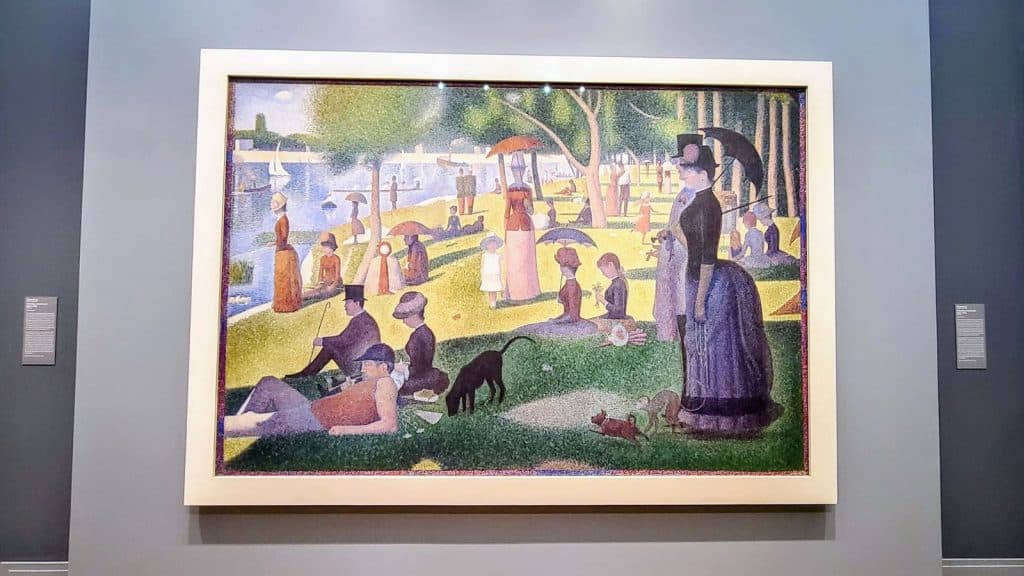
A Sunday on La Grande Jatte–1884 – Georges Seurat (1884–86)
A whole Sunday afternoon frozen in dots. This enormous painting is Seurat’s masterpiece in pointillism, a technique where tiny colored dots come together to form a full scene. It’s so iconic that you’ll recognize it before you realize you’ve seen it—just lean in and look at the details. Then step back and see the magic.
Untitled (Portrait of Ross in L.A.) – Felix Gonzalez-Torres (1991)
Untitled (Portrait of Ross in L.A.) – Felix Gonzalez-Torres (1991)
At first glance, this installation looks playful—a pile of colorful, individually wrapped candies spilled across the museum floor. But look closer. This piece is a deeply personal tribute to the artist’s partner, Ross Laycock, who died of AIDS-related complications in 1991.
The candies, which visitors are invited to take, collectively weigh 175 pounds—the ideal weight of Ross. As people take pieces away, the pile diminishes, echoing the slow decline of a loved one’s health. It’s powerful, interactive, and heartbreakingly beautiful. Few works in the museum invite such quiet reflection—and participation.

Street Paris Rainy Day – Gustav Caillebotte

Street Paris_ Rainy Day – Gustav Caillbotte Photo Credit Margarita Ibbott via DownshiftingPRO
Paris Street; Rainy Day – Gustave Caillebotte (1877)
One of the best depictions of 19th-century Paris, this one’s cinematic. Umbrellas dot the cobblestone streets as elegant Parisians stroll by in pairs. Caillebotte plays with perspective and light so well that you can almost hear the click of shoes on wet pavement. It’s a moody masterpiece that feels both distant and modern.
Nude Under a Pine Tree – Picasso

Nude Under a Pine Tree – Pablo Picasso (1959)
From Picasso’s “lover and muse” period, this painting has all the hallmarks of his surrealist style—elongated curves, vibrant color, and emotional depth. It’s sensual without being explicit and more poetic than provocative. You’ll understand why Picasso’s women were always unforgettable.
Artist’s Studio “Foot Medication” – Roy Lichtenstein
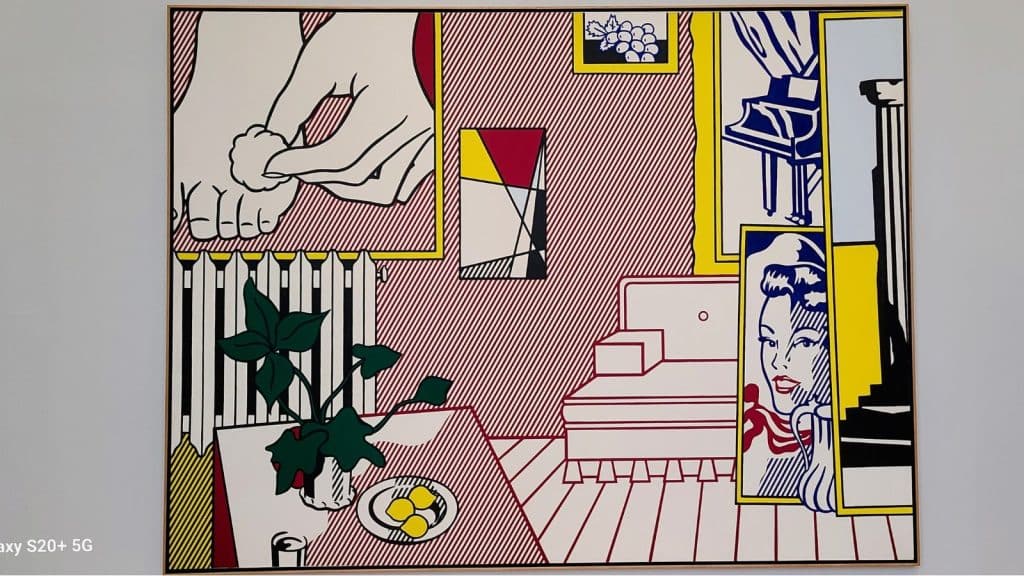
Artist’s Studio “Foot Medication” – Roy Lichtenstein (1974)
Pop art lovers, this one’s for you. With comic strip flair and those signature Ben-Day dots, Artwork within artwork, Lichtenstein transforms something as mundane as sore feet into a bold, satirical statement. It’s funny, relatable, and irrefutably modern. This is art with a wink.
Horse – Raymond Duchamp-Villon
Horse – Raymond Duchamp-Villon (1914)
More machine than mare, this Cubist sculpture reimagines the horse as a symbol of modern power. Created just before WWI, Horse captures movement and strength with bold, angular lines. It’s a must-see for modern art lovers—and a striking reminder of how art and industry collide.

Improvisation No. 30 (Cannons) – Wassily Kandinsky (1913)

Improvisation No. 30 (Cannons) – Wassily Kandinsky (1913)
If you’ve ever wondered what music might look like on a canvas, Kandinsky gives you the answer. This abstract piece, painted just before WWI, combines vibrant color, expressive linework, and chaotic energy to hint at tension and change. It’s emotional, abstract, and surprisingly musical—just like its title implies.
Liz #3 – Andy Warhol
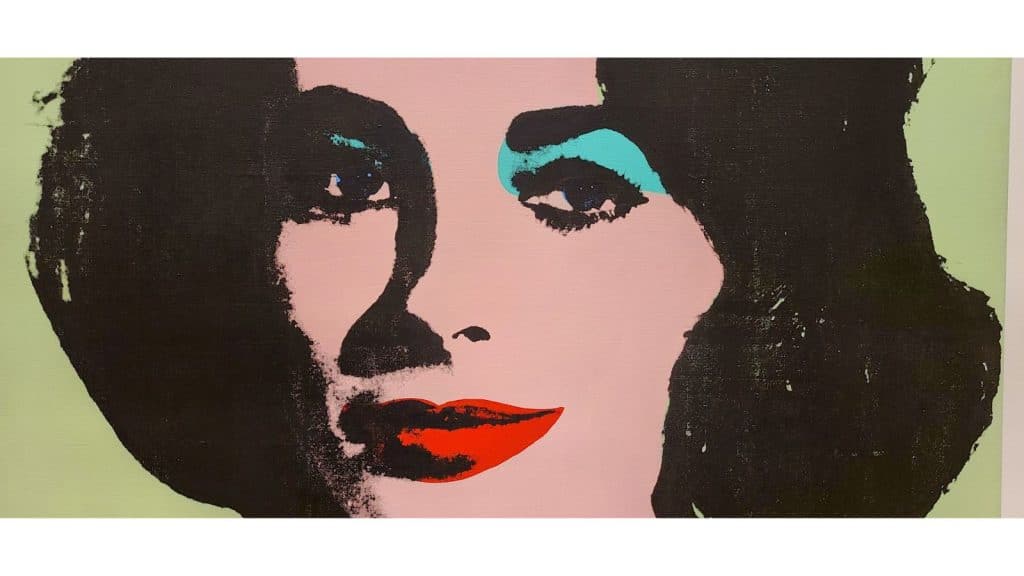
Liz #3 – Andy Warhol (1963)
Elizabeth Taylor, Warhol-style: glamorous, electric, and a little untouchable. Warhol’s silkscreen process captured celebrity culture like no one else. This piece, part of his obsession with fame and beauty, is a sharp, colorful portrait of Hollywood royalty in the pop art era.
Greyed Rainbow – Jackson Pollock (1953)

Greyed Rainbow – Jackson Pollock (1953)
Pollock’s action painting is chaotic at first glance, but this massive canvas feels like raw emotion poured out in layers. With streaks of color on top of a moody gray, it’s more than just paint splatters—it’s energy, rebellion, and feeling, all at once. Stand close. Then step back. It’s an experience.
Soft Light Swirtches – Ghost Version II – Claes Oldenburg

Soft Light Switches – Ghost Version II – Claes Oldenburg (1963)
Claes Oldenburg has a knack for turning the ordinary into the extraordinary, and Soft Light Switches – Ghost Version II is a perfect example. There are two side-by-side, one off-white and the other brown. These oversized, soft-sculpture light switches—canvas filled with kapok, gesso, and pencil—are playful, surreal, and a little haunting. The “ghost” version adds a dreamlike quality, making something so familiar feel suddenly out of place. As with much of Oldenburg’s work, it’s a clever commentary on American consumer culture and our relationship with everyday objects.

Conclusion
You could spend days wandering the halls of the Art Institute of Chicago and still discover something new each time. But if you’re planning your first visit—or just want a hit list for your next trip—these 13 masterpieces are a fantastic starting point. From Van Gogh’s dreamy bedroom to Warhol’s pop culture portraits, each artwork reflects the museum’s incredible depth and diversity. Chicago is a city that fuels creativity, and the Art Institute is where that energy truly shines. Add this museum to your must-see list—you won’t regret it.
Other Art-Centric Posts you may like
- The Barnes Foundation in Philadelphia
- Finding Indigenous Artist Dempsey Bob at The McMichael Gallery
- Smithsonian Museums in Washington, DC
- 17 Must-See Museums in New York City
- Plan Ahead: The Art Institute of Chicago Announces 2025 January-June Exhibition Schedule
🥾 Explore: Tours & Experiences
🏡 Where to Stay: Top Accommodations
🚙 Hit the Road: Car Rental Deals
🛫 Get Away: Find Flight Deals
🎒 Shop: Travel Essentials