This post includes affiliate links. When you purchase through these links, we may receive a small commission at no extra cost to you. For full details, please see our affiliate disclosure page.
Your Guide to the Best Things To Do in London
Why Visit London
London attracts over 20 million visitors each year, served by major airports like Heathrow and Gatwick that connect easily to Europe and North America. The city’s compact core, free museums, royal heritage, and diverse neighborhoods make it ideal for trips of three to seven days, with excellent public transport via the Oyster card system.
West London
West London, reaching west past Park Lane to include the boroughs of Kensington and Chelsea, Hammersmith and Fulham, and parts of the City of Westminster, captures refined elegance and class. Grand homes, lush parks, high-end shops and exceptional museums set it apart as the city’s wealthiest area and top pick for discerning travelers. Hotels in this area will not be cheap but they will be convenient.
Knightsbridge Highlights
🏡 Where to Stay: Top Accommodations
🥾 Explore: Tours & Experiences
🚙 Hit the Road: Car Rental Deals
🛫 Get Away: Find Flight Deals
🎒 Shop: Travel Essentials
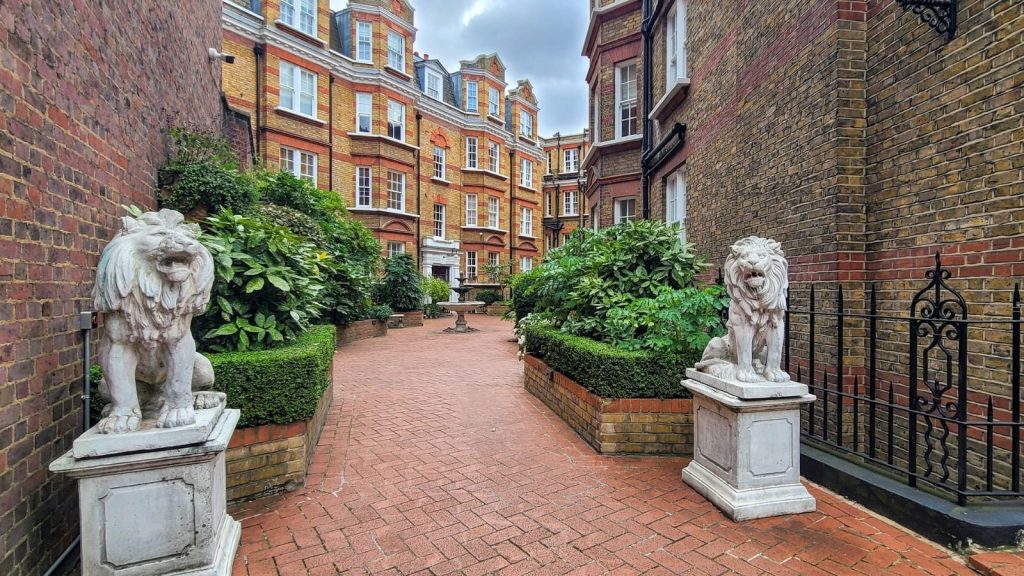
Knightsbridge features elegant garden squares surrounded by Edwardian townhouses and red-brick architecture. It draws international visitors for its luxury shops and proximity to green spaces, offering a refined atmosphere.
Hyde Park Essentials
The 350-acre public park is between Mayfair and Knightsbridge, enjoying manicured gardens, a lake, wooded areas, the Serpentine Lake for boating, and Speakers’ Corner for public discussions. This is a very large urban park (think Central Park in NYC size) but an oasis in this bustling city. Seasonal events fill the space, from winter markets to summer gatherings, bordered by Kensington Gardens.
Moco Museum (near Marble Arch/Hyde Park edge)
The Moco Museum, London is an extention of the Moco Amsterdam and Barcelona. Directly behind the Marble Arch, it displays contemporary works by artists such as Banksy, Yayoi Kusama, and Damien Hirst in an immersive setting within a restored Georgian building. It offers a modern contrast to nearby traditional collections, suitable for a one- to two-hour visit. My London Go City Pass included the Marble Arch stop on the hop-on-hop-off route, so I made time to visit this compact yet striking contemporary art museum right in the city’s heart.
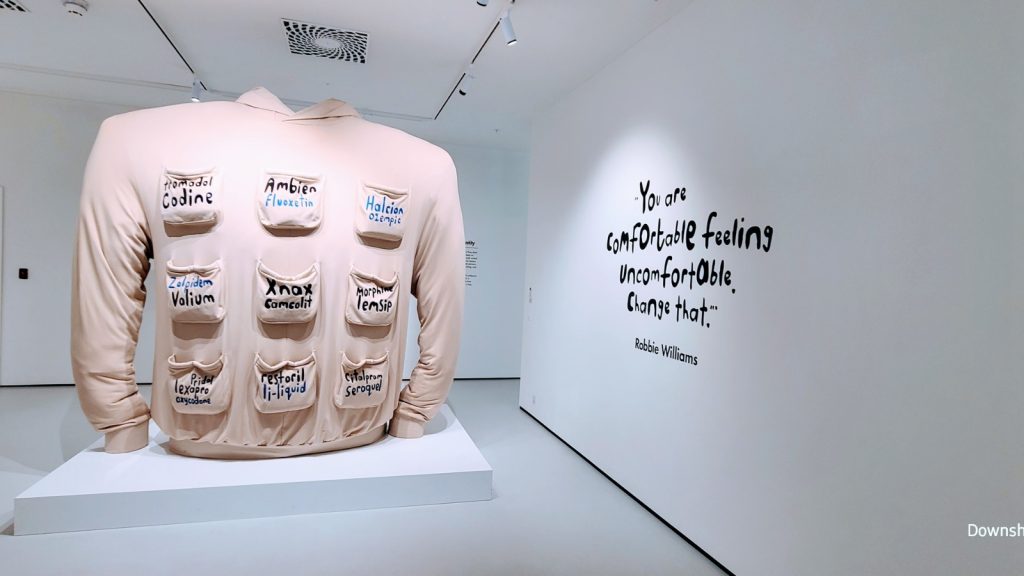
I was so pleased to see the Robbie William’s exhibit was at the Moco. It is interactive, impressive and a window into his chaotic mind. Creative and provocative, was worth the stop!
South Kensington
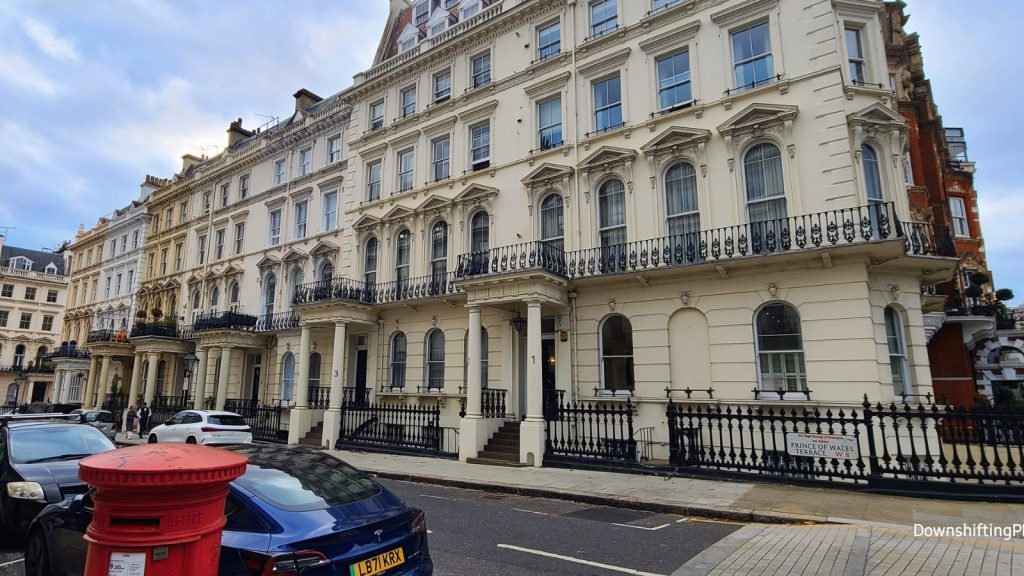
South Kensington houses major institutions including the Natural History Museum with its dinosaur skeletons and the Science Museum with interactive exhibits on innovation. These Victorian-era buildings allow for a full afternoon exploring free galleries.
Harrods
No trip to Knightsbridge feels complete without exploring the iconic Harrods department store, made even more convenient by its direct connection from the Tube Station (and plenty of buses). Established in 1849, Harrods stands as a true London landmark, offering an extraordinary range of goods within its striking terracotta facade.
Step inside to marvel at the opulent interiors, where every detail from mosaic floors to grand domes reflects masterful craftsmanship. Keep an eye out for the memorial to Princess Diana and Dodi Fayed (a statue – Innocent Victims), the array of elegant cafes, the legendary Food Hall and their gourmet displays.
Victoria and Albert Museum
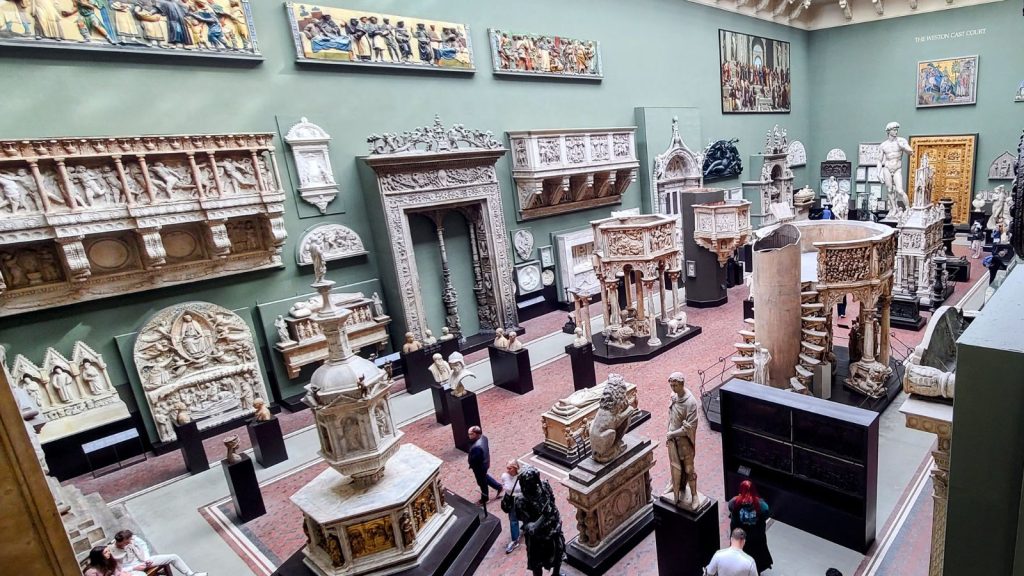
The Victoria and Albert Museum holds 2.8 million objects spanning art and design, from ancient sculptures to fashion collections across 145 galleries. This was my first time in the museum and I now know this is a multiple day excursion. There is so much to see from The Cast Courts feature full-scale replicas like Trajan’s Column, to stunning silver pieces and masterpieces.
Central London Core
Central London defies a single pinpoint—its vibrant heart radiates across a broad sweep generally framed by the Thames to the south, Hyde Park westward, the Euston Road northward, and the Barbican eastward. This dynamic zone thrives as the nexus of retail therapy, artistic pursuits, and layered heritage, embracing iconic pockets like Mayfair’s tailors, Soho’s theaters, Oxford Street’s bustle, and beyond.
Central London incorporates the West End—the city’s glittering entertainment district—along with Leicester Square at its lively core, home to cinemas, theater ticket kiosks, and red-carpet events. These areas cluster tightly for seamless walks between stage doors and neon-lit plazas, making Central London a natural base for culture seekers.
Westminster Abbey
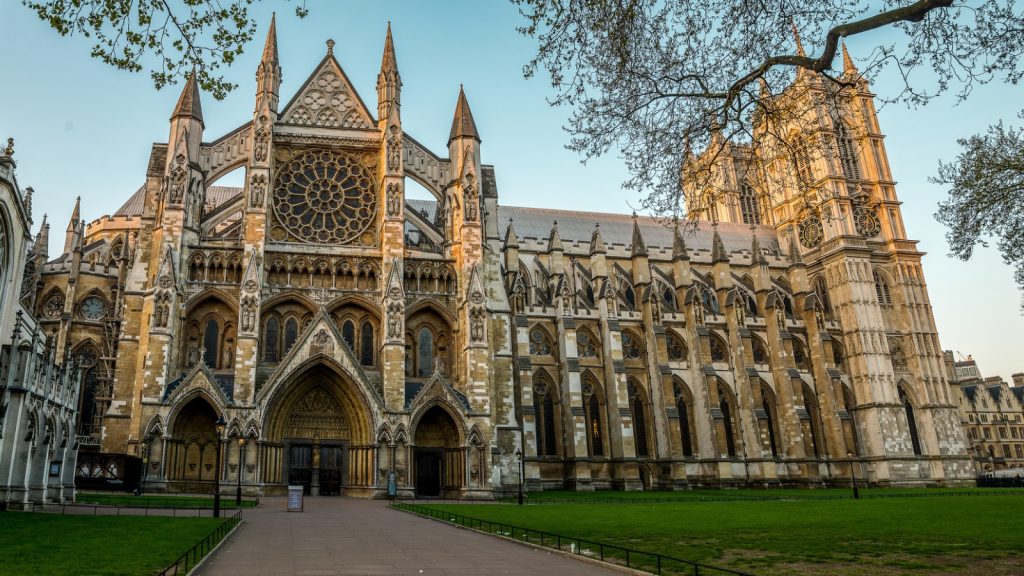
Established in 1066, Westminster Abbey has hosted coronations, royal weddings, and burials, including Poets’ Corner with memorials to Chaucer and Dickens. The Gothic structure, a UNESCO site since 1987, includes the ancient Coronation Chair; attend evensong for a quieter experience.
Houses of Parliament & Big Ben
The Palace of Westminster, commonly called the Houses of Parliament, was initially constructed as a royal palace in the eleventh century. Edward the Confessor built the initial palace complex around 1045-1050 alongside Westminster Abbey, making it a primary royal residence until a 1512 fire destroyed the king’s apartments.
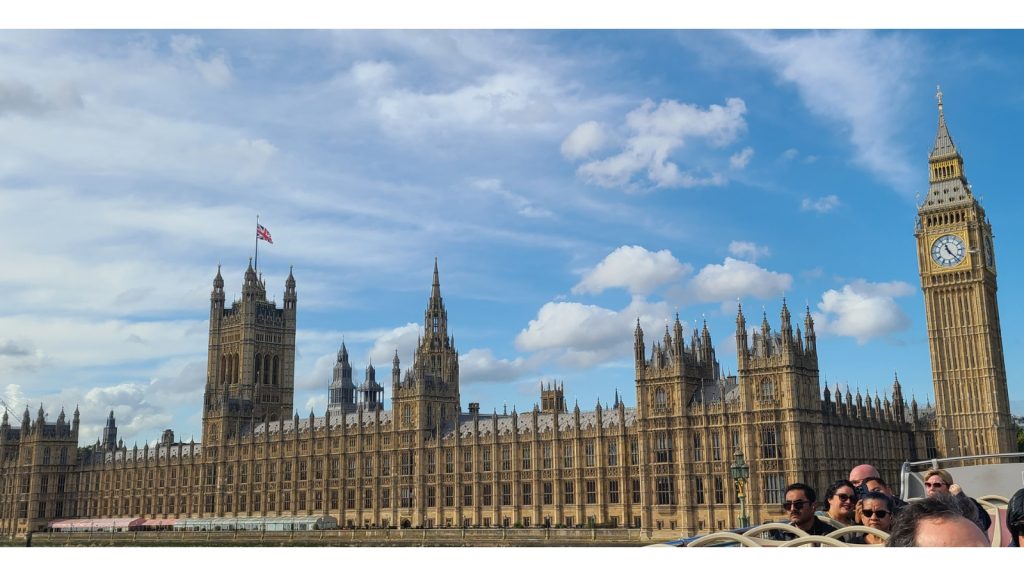
The Houses of Parliament (the House of Common and the House of Lords), were rebuilt in Gothic Revival style after 1834, with Elizabeth Tower housing the 13.7-ton Big Ben bell. Public tours reveal architectural details and historic passages.
The Elizabeth Tower rises from the palace’s northern corner, home to the Great Bell nicknamed Big Ben—properly the 13.7-ton chime that has rung out since 1859 as one of London’s defining icons.
Tate Britain (Millbank, west from Parliament)
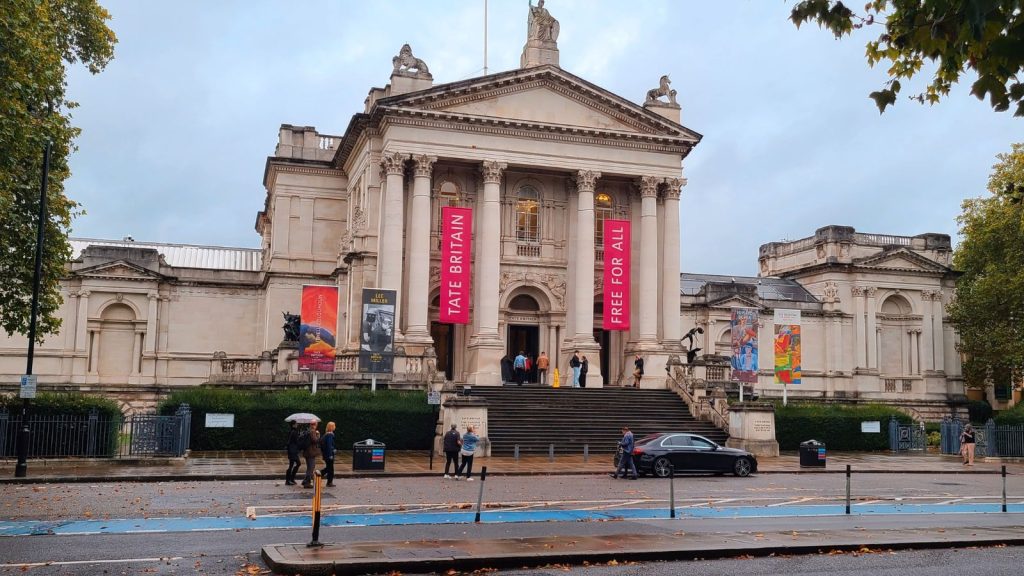
Tate Britain focuses on British art from the 1500s to today, with highlights like J.M.W. Turner’s seascapes and pre-Raphaelite paintings in riverside galleries. Most areas are free, connected by themed displays tracing artistic evolution.

While in London last fall, I took in the Lee Miller exhibit and it was fantastic. Always have a look at current exhibitions and make sure to get your tickets in advance. The line up for tickets was pretty long when I was there and I had to wait 90 minutes before entering. I wrote an review in The Roam Report.
St James’s Park
This 57-acre park lies adjacent to Buckingham Palace, featuring an ornamental lake with pelicans and tree-lined paths. It provides calm views toward Whitehall, serving as an ideal spot for a leisurely walk or rest.
St. James Park is surrounded by London institutions—Buckingham Palace and the Mall, Green Park, St James’s Place, Trafalgar Square, and several government offices, including the iconic 10 Downing Street, residences of the Prime Minister.
Buckingham Palace & Changing of the Guard
Buckingham Palace, the sovereign’s principal residence, includes 775 rooms and opens its state apartments from July to September. While many visitors go in the hope of spotting the reigning monarch, the main attractions are the Changing of the Guard, an elaborate ceremony in which the palace guards change shifts, and the Horse Guard Parade, a parade ground in St James’s Park in which the annual Trooping of the Colors takes place.
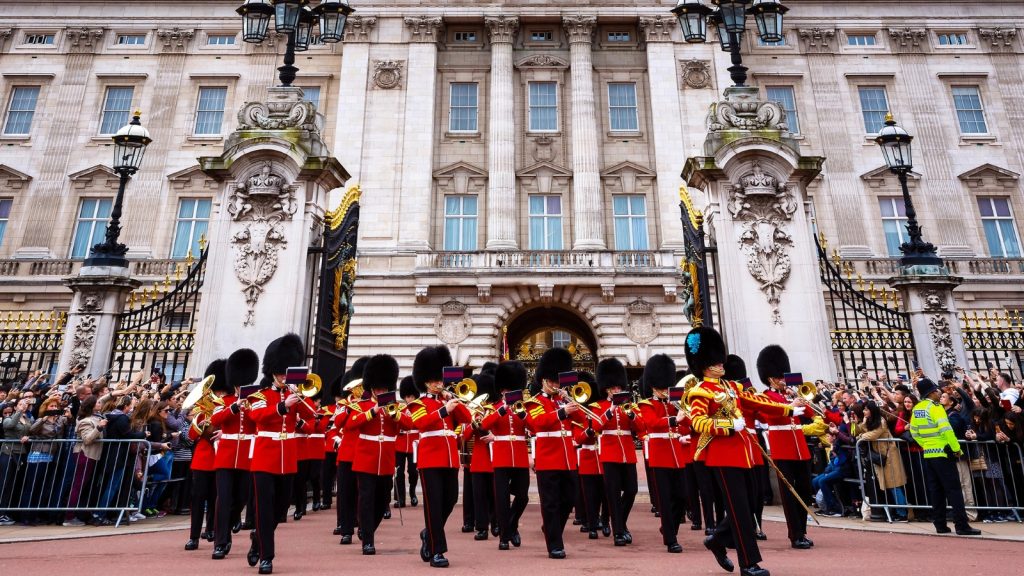
The Changing of the Guard ceremony occurs at 11 a.m. and the Captain’s inspection at 3 p.m. most days in summer, drawing visitors to witness the tradition. During the Autumn and winter this ceremony is typically held on Mondays, Wednesdays, Fridays, and Sundays (10 a.m. on Sundays). Buckingham Palace can be selected as one of your 2 to 7 attractions with the with the Go City London Explorer Pass,
Trafalgar Square & National Portrait Gallery
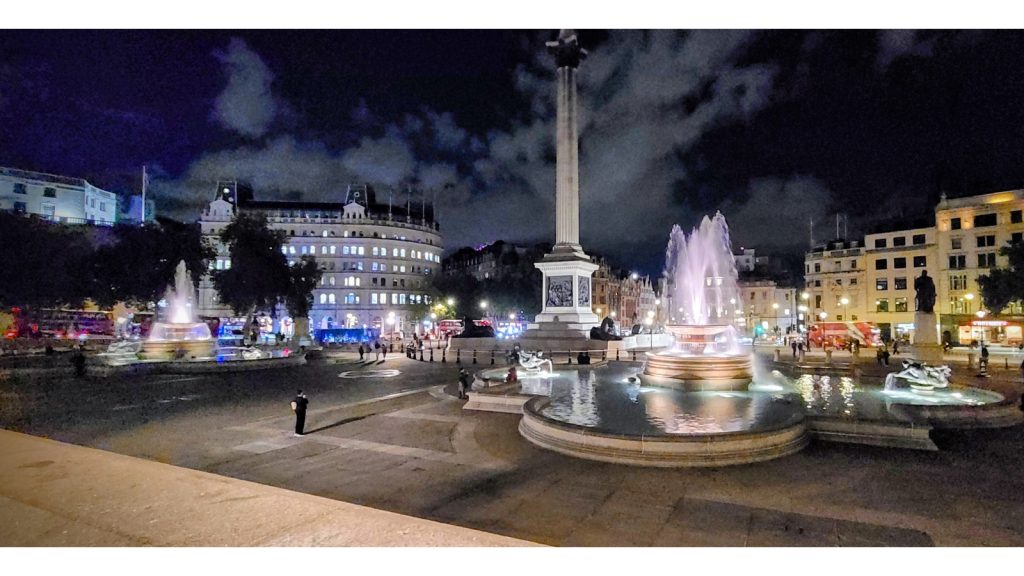
Trafalgar Square centers on Nelson’s Column amid fountains and lion statues, a gathering point for events. The Square stands as one of London’s most recognizable public spaces, dominated by Nelson’s 169-foot column commemorating the 1805 Battle of Trafalgar, flanked by four massive bronze lions and twin fountains designed by Sir Edwin Lutyens. The square has long served as a focal point for political rallies, celebrations, and Christmas trees from Norway since 1947, offering a front-row seat to the city’s pulse.

A truly unique experience for me was when I commissioned a writer to type up a poem for my husband. This is by donation and we spoke for a few minutes about what he was like, why I loved him and about our life together. It was a moment I will not soon forget.
National Portrait Gallery

The National Portrait Gallery above offers free access to portraits from Holbein to modern figures, emphasizing Britain’s visual history. My visit to the National Portrait Gallery was wonderful. They had an exhibit on The Tudors and it was very extensive. The beauty of this museum is seeing all the different portraits from royalty in the 17th century to pop singers in 2026. A family portrait of Elton John was unveiled last week and it was spectacular. One of my favourites was that of Harry Stiles and
Leicester Square
Leicester Square anchors the West End theatre district, with nearby Victoria Station providing easy access. In my opinion, this is a great area to stay in. Anything close to Victoria Station is ideal for catching the Tube, regional trains and the bus.
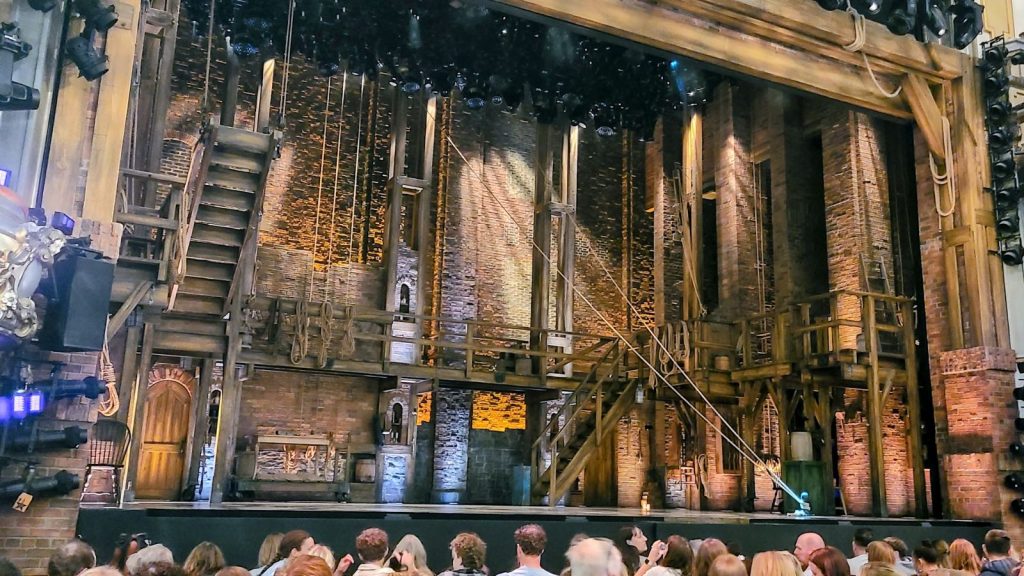
I felt very safe in this area and it was a 20 minute walk to my hostel. At Leicester Square, I found the ticket office and bought discounted tickets for two standout shows: Hamilton and The Book of Mormon. The price was unbeatable and the seats were premier (in the orchestra area – each were £49 & 40 respectively).
Piccadilly Circus Energy
Piccadilly Circus marks the intersection of major roads with illuminated signs and the Shaftesbury Memorial Fountain. It connects to Regent Street’s shops and the West End’s theaters, bustling day and night.
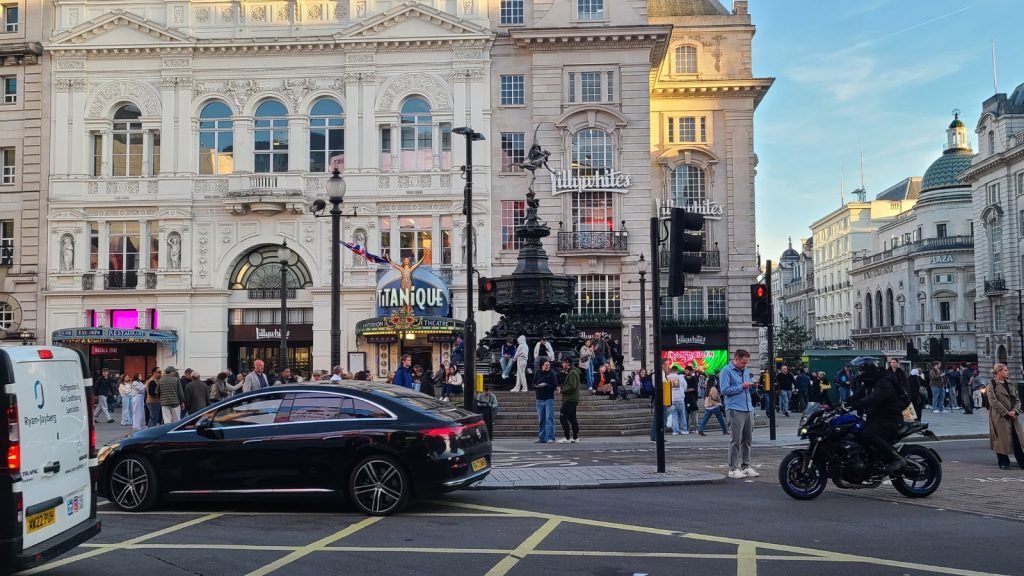
This area reminds me of Time Square in New York or the Champs Elysee in Paris. Big, birght signs, shopping, many buses and general urban chaos. However, it is an important part of the city of London.
British Museum
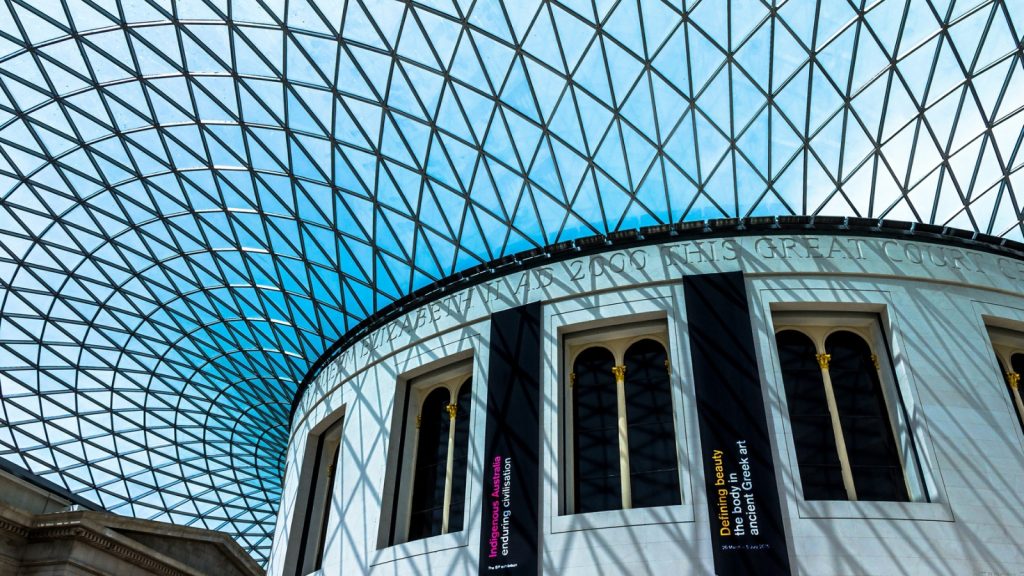
Located in the Bloomsbury area of London, closest to the Holborn, Tottenham Court Road, Russell Square, and Goodge Street tube stations, The British Museum safeguards eight million artifacts, including the Rosetta Stone and Parthenon sculptures, under a glass-covered Great Court. Galleries cover global civilizations; plan for key sections like mummies or the Enlightenment collection to manage its scale.
After visiting the Acropolis Museum in Athens, I was hard pressed to visit the British Museum as it still holds key statues and artifacts from the Acropolis. Returning items is not unprecedented at recently, the Scotish National Museum returned a Nisga’a Nation Totem Poles in 2025.
East/City Thames Crossing
Tower Bridge vs. London Bridge
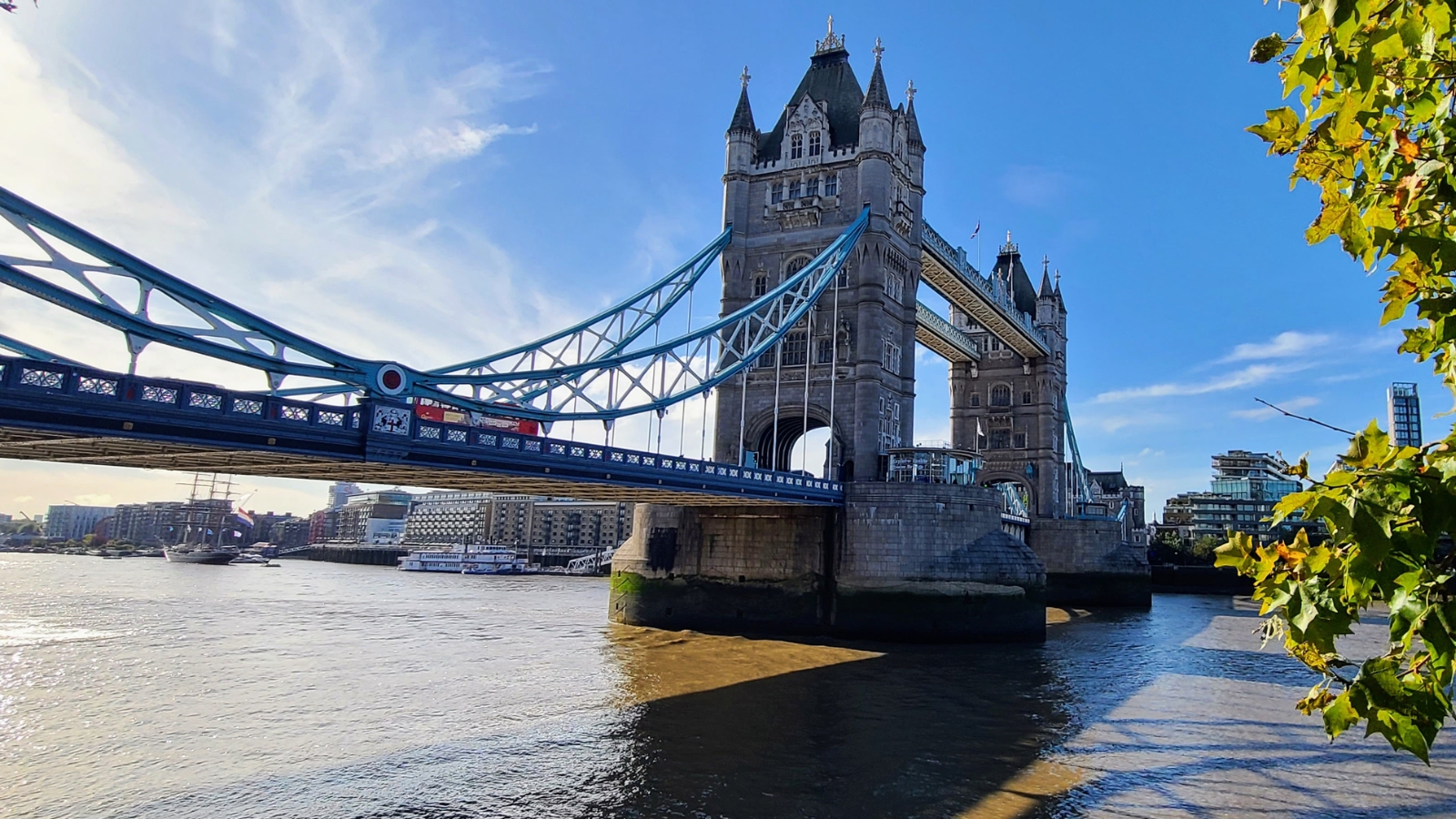
Tower Bridge, which most Norther Americans think is the London Bridge, opened in 1894. It features raising bascules and Gothic towers. Walk the bridge’s high-level walkway for river perspectives.
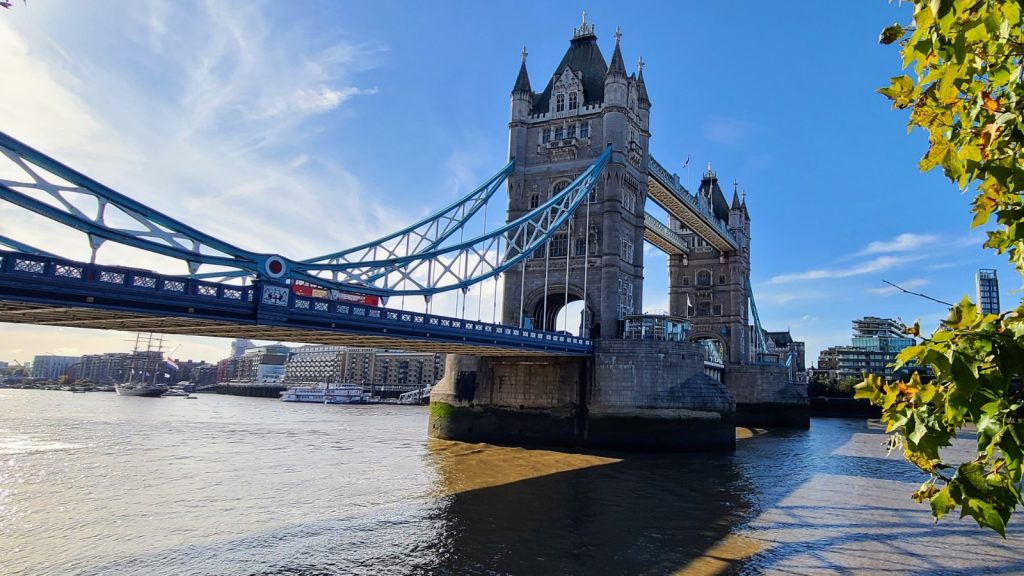
In reality, London Bridge is a straightforward road bridge carrying traffic in both directions, linking the Monument—commemorating the 1666 Great Fire—with the London Bridge station area and the Shard, London’s towering glass icon. It’s easy to cross and gives you a great view of the Thames River.
Tower of London Secrets
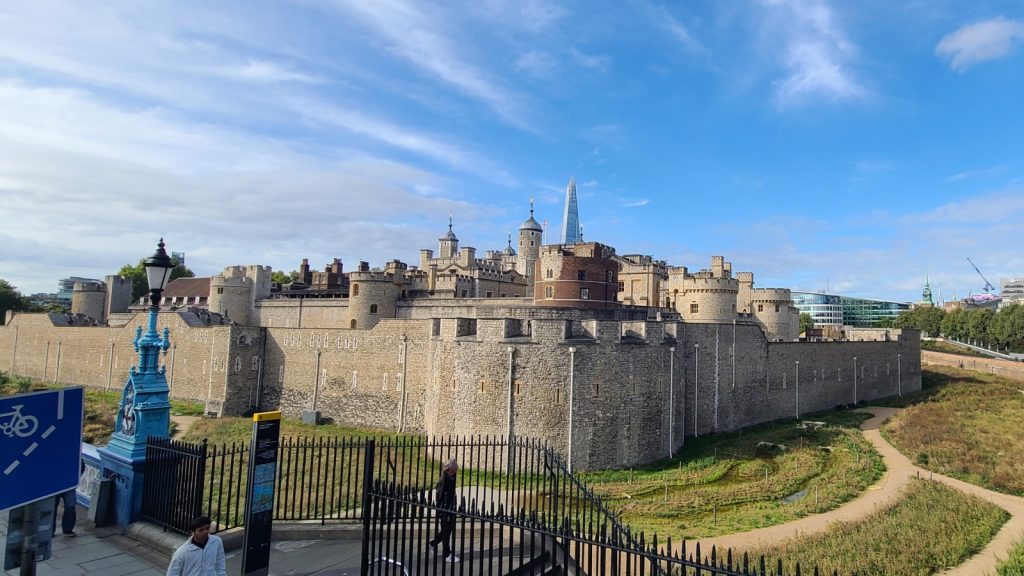
Founded in 1078 by William the Conqueror, the White Tower served as fortress, palace, prison, and treasury, now home to the Crown Jewels. Yeoman Warder tours detail its history, from royal executions to raven legends. Encircled by two rings of walls, a moat, and Traitors’ Gate, its expansions under Richard I, Henry III, and Edward I created the fortress seen today, a UNESCO World Heritage site rich in ghosts, ravens (legend says their departure foretells the kingdom’s fall), and Yeoman Warder-led tales of intrigue and execution.

If you want to visit, this attraction is included in the Go City Pass. I used my pass to enter but I would encourage you to get there just before opening. As I left a few hours later, there was a bit of a line up. Head straight to the Crown Jewels and then have a look around once you’ve done this. They are pretty impressive!
City of London Skyline
The City of London, a historic square mile, blends Christopher Wren’s churches and Roman walls with modern offices. St. Paul’s Cathedral dome over the financial district’s mix of old and new.
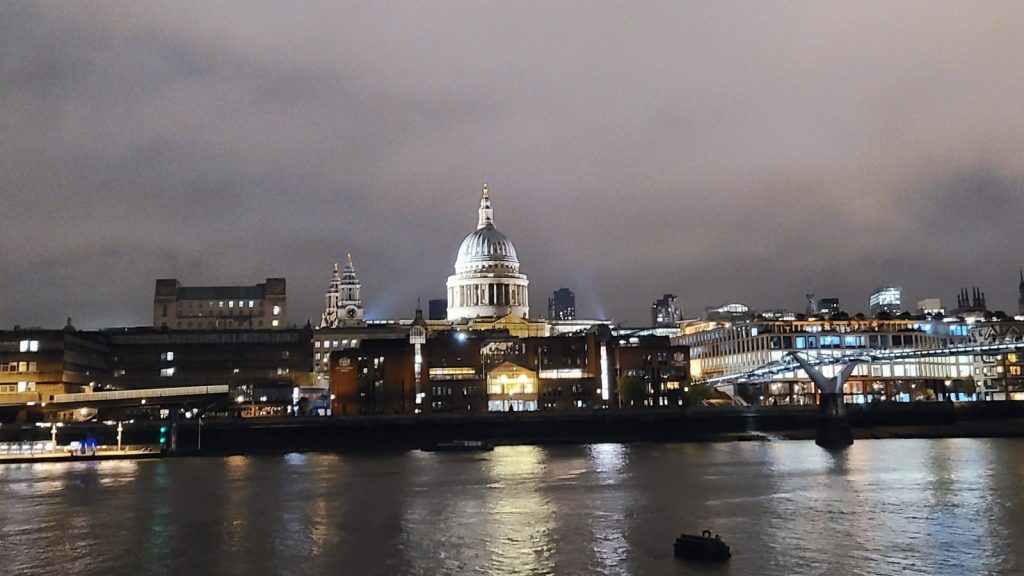
Sometimes the most iconic views are from other iconic buildings. The picture above was taken from the Tate Modern across the Thames River. The Millenium Bridge is just to the right and the view from here towards the other buildings was extraordinary at night.
Iconic Modern Towers
The same can be said of buildings that have become landmarks in their own right. Key structures include the Gherkin (30 St Mary Axe, 2004), the Cheesegrater (Leadenhall Building), the Shard (2012, 1,016 feet, Western Europe’s tallest), 20 Fenchurch Street with its Sky Garden (book ahead), and Sales Force Tower. These define the evolving skyline.
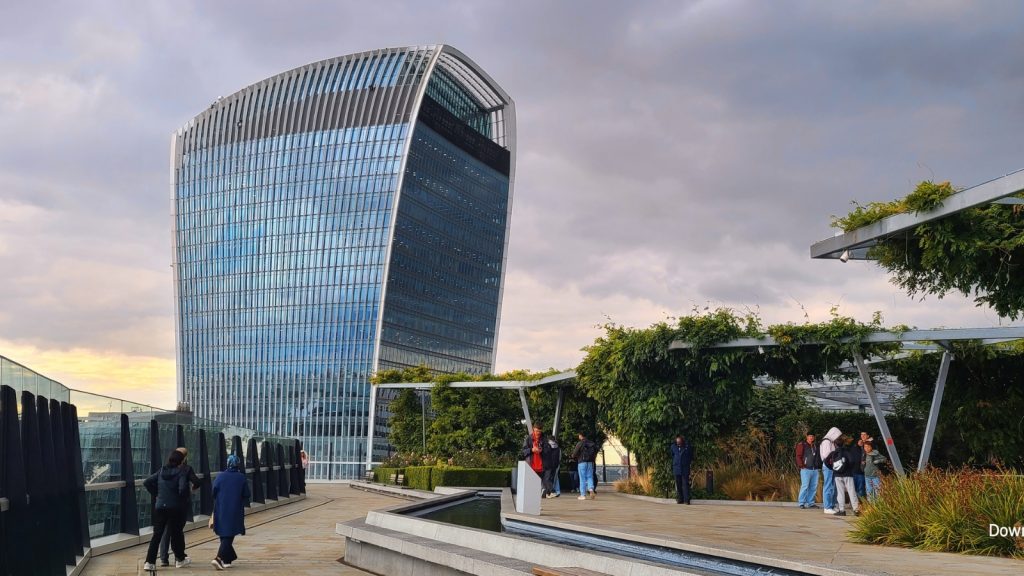
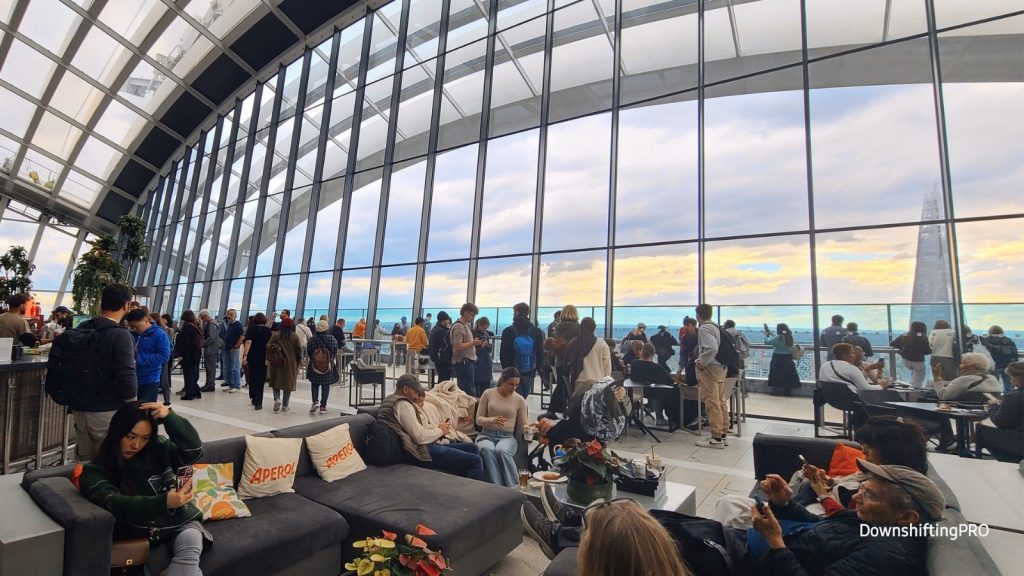
Tour Tip: You need to book The Sky Garden at least three weeks in advance. I was lucky enough to have an employee show me grace and let me go up. Otherwise, I would have missed out on this ‘free’ attractions. Someone suggested I go a block away to The Garden at 120, I am so glad I took their advice. There was no line up and was also free but provided a more scalable view of these iconic buildings. The Gherkin looked like it was just a few blocks away. I highly recommend this stop!
South of the River
River Cruise Options
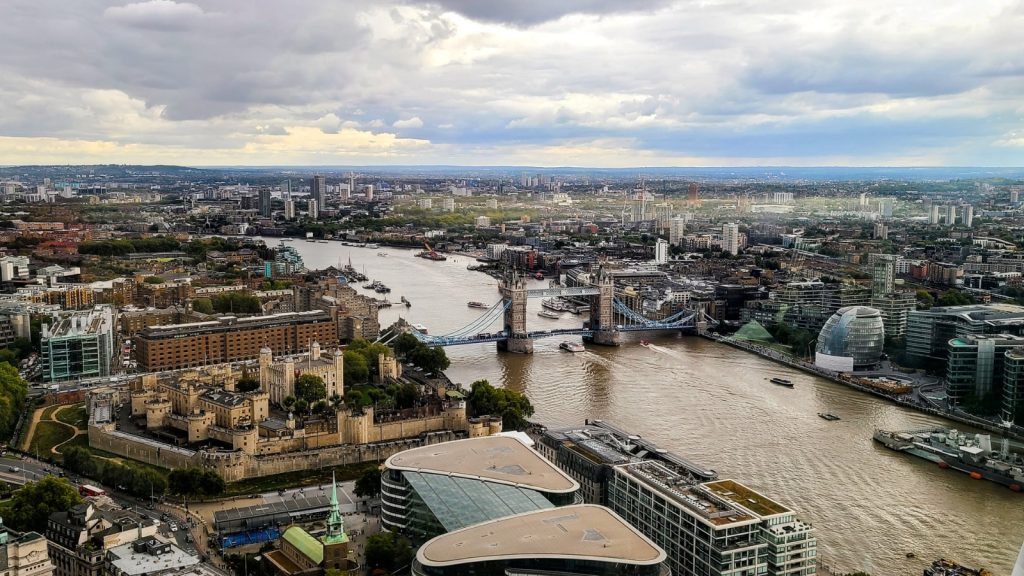
Thames river services like Uber Boats by Thames Clippers run from Westminster to Greenwich, accepting Oyster cards and offering commentary on landmarks. They provide a relaxing alternative to land travel with open-air decks. I traveled from Millbank Pier (in front of the Tate Britain) to Bankside Pier. It provided a scenic view of Whitehall Gardens, Millenium Bridge, and the London Eye. Because this runs in a loop, its a great way to see London from the Thames Rivers at a reasonable price – your price is reduced if you book 7 days in advance for a hop-on-hop off 1 or 2 day pass.
The Thames Clipper and the London Eye (see below) are an option for the London Go City Explorer Pass. As there are numerous options, it is best to consult their website.
South Bank & London Eye
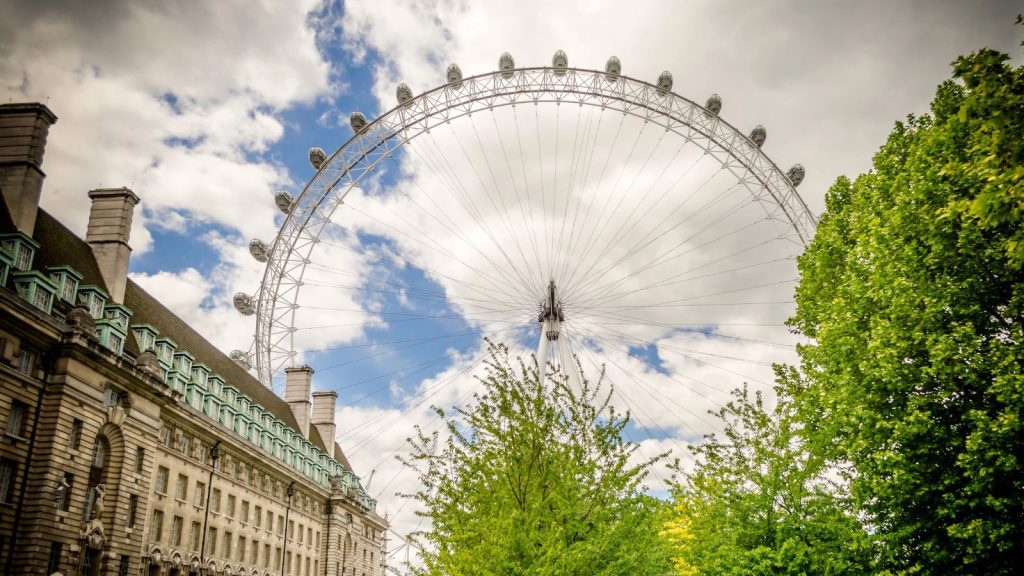
The South Bank walkway stretches from Westminster Bridge to Blackfriars, lined with book markets, performance spaces, and the 135-meter London Eye for 30-minute panoramic rides visible up to 25 miles. Even on busy days, the area tempts with rotating exhibitions, holiday markets, and a regular pop-up of second-hand books for unexpected discoveries.
Tate Modern
Set in a former power station, Tate Modern displays modern and contemporary art, including large-scale installations in the Turbine Hall and works by Picasso and Warhol. Free admission includes top-floor views across to St. Paul’s Cathedral.
London rewards the discerning traveler with its seamless blend of royal heritage, world-class museums, and riverside energy—all accessible through smart geographic clusters and passes like the Go City Explorer or All-Inclusive Plus. Whether tracing history at the Tower, savoring discounted West End seats, or catching skyline panoramas from Sky Garden, this itinerary maximizes discovery while minimizing transit hassles. Plan ahead for tickets and guards, pack comfortable shoes for those walkable cores, and let London’s timeless allure unfold at your pace.
Disclosure: some of these attractions were part of the London Go City Explorer Pass. I partnered with them for my London Trip only but bought passes for Dublin with my husband. All opinions and recommendations are my own.
🥾 Explore: Tours & Experiences
🏡 Where to Stay: Top Accommodations
🚙 Hit the Road: Car Rental Deals
🛫 Get Away: Find Flight Deals
🎒 Shop: Travel Essentials