
This post includes affiliate links. When you purchase through these links, we may receive a small commission at no extra cost to you. For full details, please see our affiliate disclosure page.
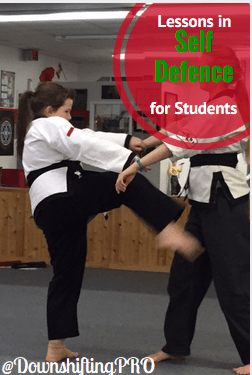
Living in a city comes with a lot of unique experiences, some good, some bad, and some just plain weird. Just a couple of days ago, my roommate and I found ourselves in one of the lesser desired situations that often come with living in a big, very diverse city. On our way to Chinatown for some bubble tea, we were approached at the bus stop by an old, scruffy-looking man smoking a cigarette. Now, this is not something entirely new to us nor is it all too concerning since it is a very central, busy bus stop until he took a step towards my roommate (cue self-defence classes).
“You have very nice teeth. Who is your dentist?”
🏡 Where to Stay: Top Accommodations
🥾 Explore: Tours & Experiences
🚙 Hit the Road: Car Rental Deals
🛫 Get Away: Find Flight Deals
🎒 Shop: Travel Essentials
Coming from the GTA and being the patient person she is, my roommate sees no harm in holding a light conversation with the man as we wait for our bus.
“Oh, thank you but I’m not from here. I go to a dentist in the GTA.”
The man doesn’t leave and continues to question my roommate with friendly inquiries for a couple of minutes. Nothing too personal or strange. But of course, the man’s Islamaphobic and racist thoughts just must rear their ugly face.
“So are you Indian?”
“Um, yes. Well, my parents were born there but I was born in Canada.” (She’s actually Bengali but she lets it slide to save herself the explanation.)
“I see, you sound very Canadian.” (Now what does that sound like…?) “So are you a Buddhist? A Muslim?”
“I’m Muslim.”
“Really? You are a lot smarter than most Muslims. They’re very backward people.”
Okay. He’s crossed the line and the situation has become uncomfortable. We’re clearly in the presence of a man who thinks he can define what a Canadian is and who has strong enough negative opinions about Islam that he feels the need to share them with a practicing Muslim, and yet, my roommate doesn’t say anything. I don’t say anything. No one else mentions anything. Why? The conversation breaks off briskly as the man leaves to catch his bus as he tosses the butt of his cigarette to the side.
This isn’t the first time something like this has happened to me or one of my friends, it’s not even the weirdest story I’ve heard. Luckily, nothing past the exchange of a few nasty words and shrugging off a hand has ever happened to anyone I know, but it can certainly be surprising to realize that almost every woman I know has had a similar experience at least once. In no way is Ottawa any less safe than most cities nor is it crawling with an unusual amount of nosy men. But why do women put up with it?
self-defence classes self-defence classes self-defence classes self-defence classes
Self-defence classes
This week I took short self-defence classes with Janet Heffernan of Strong Orange Violence Prevention (coincidentally organized by that very same roommate) and learned a little bit about what women can do to stop tolerating this kind of behaviour from men. We actually took about 60 of the 90 minutes simply talking about different types of aggressions, different situations, societal expectations for women, and self-esteem and dedicated the rest of the time to learning easy defense techniques that anyone of any size and strength can perform. Here are some of the main points that I took away from this class.
1. What would a man do?
Reflect on the way that you act and react to different situations. Women are usually brought up to be nurturing, thoughtful, and polite. Janet pointed out that none of these qualities are inherently negative (“I think everyone should be as nurturing, thoughtful and polite as women are expected to be” she says), but it is often these qualities that taken advantage of. Women, in general, don’t like being rude, making a fuss or hurting people’s feelings. Think about it.
You’re at a work party and suddenly your boss comes to introduce you to an acquaintance. You don’t particularly appreciate your conversation with a co-worker being interrupted but you act polite anyway. The stranger introduces himself and as you put out your hand to shake, he pulls you into a strong hug. “I’m a hugger,” he says. He then proceeds to swing his arm around your shoulders and doesn’t remove it until your boss beacons him to meet other people.
What would you do? You were probably quite uncomfortable through the whole ordeal yet you said nothing in order to be polite to the stranger and your boss. You probably smiled through your discomfort and maybe even laughed a little to try and show him that you aren’t bothered by the contact even though you clearly were bothered. This is what most women would do. Take any similar situation (encounters with a lesser known family member, a friend of a friend, a classmate, a man in a bar, etc.) and you’d do it too.
But what would a man do? Men aren’t taught to be polite and to not hurt other people’s feelings to the same extent that women are. They shrug people off, they grimace and they become vocal. You need to know how to react and you need to trust your inner voice (and you consider taking self-defence classes).
self-defence classes self-defence classes self-defence classes self-defence classes
2. Your three most powerful weapons
Janet’s most important lesson was to teach us how to use our 3 most powerful weapons when we get uncomfortable.
Number 1: Your instinct. Trust your gut feeling! Janet says, if someone looks creepy, it’s because they are. Your subconscious can recognize dangerous body language and sketchy situations before you can.
Number 2: Your voice. Your words can control a dangerous situation in a matter of seconds. By using your voice against an aggressor you (1) take away their element of surprise because you acknowledge their presence, (2) bring attention to your situation to anyone around, and (3) show the aggressor that you will not be an easy target. We spent about 20 minutes of the class practicing yelling “NO!” or “Get off!” or “Don’t touch me!” and it doesn’t come as naturally as you would think.
Number 3: Your Awareness. Think about your surroundings and adjust your awareness respectively. Most people naturally become hyper-aware in stressful situations but if you know how to control your awareness, you may be more prepared. Learn to know the codes of awareness.

3. Know your code
Adjust your awareness based on your environment:
- Code White: A state of relaxation, “zoning out”. This should only be practiced in safe spaces such as your bedroom, with close friends and family, etc.
- Code Yellow: Default state of awareness, relaxed but paying attention to the situation at hand. Ideal for the classroom, shopping, and work.
- Code Orange: Discomfort, there is a possibility for conflict. Imagine the moment just before a baby is about to cry, the baby could calm down and fall asleep or have an all-out hissy fit. So you plan for the worst, what will you do if the baby starts to cry? Similarly, if you being followed late at night and you start to feel uncomfortable, you make a plan for if the stranger attacks. Where would the stranger be weakest to a hit? What will you yell at him if he gets too close? Where is the nearest convenience store?
- Code Red: Danger, confrontation. This is where you put your plan into action.
4. The sweet spots
Of course, you can’t go to self-defence classes and not learn your target’s pressure points. Most are pretty straightforward if you think about it but here’s a list in case you need a reminder:
- Stomp on Feet
- Kick Shins
- Kick down on Knees
- Kick, knee, grab, pull Groin
- Kick, punch, elbow Gut
- Pinch Underarms (also work on inside of thighs, try it on yourself)
- Punch, slap Throat
- Pull, slap Ears (A hard hit to the ears can really hurt and throw off someone)
- Hit Chin and Nose
- Poke Eyes (Janet’s favourite, it only takes a little pressure to hurt someone’s eye sockets) *tip: no matter what position, if you can get your hand onto their ear then your fingers should line up with their eye. Then simply, push in your finger.
What should you hit with? Well, for women it is more efficient to hit with the palm of your hand, it’s stronger and less likely to break fingers than a fist. Hitting upwards on a chin or nose can really do some severe damage. Elbows and knees are also strong joints. If you have found yourself on the ground, make full use of your legs to kick in knees and shins.
 Lauren Ibbott is a second-year University of Ottawa student, blogger, and freelance writer. She frequently writes for DownshiftingPRO. Please follow her on Instagram @Lauren_Patii All opinions are her own. You can read more of her post below:
- Street Art in Barcelona
- Centre George Pompidou in Paris
- The Dali Theatre Museum In Spain
- University Life
- International Development Week
self-defence classes self-defence classes self-defence classes
🥾 Explore: Tours & Experiences
🏡 Where to Stay: Top Accommodations
🚙 Hit the Road: Car Rental Deals
🛫 Get Away: Find Flight Deals
🎒 Shop: Travel Essentials