This post includes affiliate links. When you purchase through these links, we may receive a small commission at no extra cost to you. For full details, please see our affiliate disclosure page.
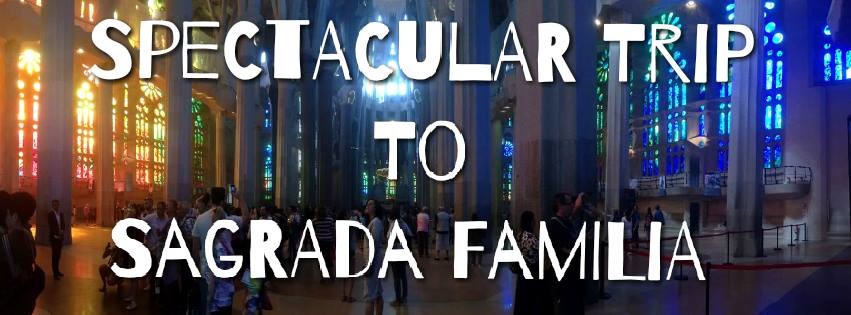
It was my first trip to Spain and there were so many things that I enjoyed (and few that I didn’t). Barcelona was spectacular: the markets, the food, the museums, the architecture, the street art; it all had a very special, warm, almost magical feel to me. The Sagrada Familia was no different.
If you are unfamiliar, the Sagrada Familia (Spanish for Sacred Family) is a very large Roman Catholic cathedral in central Barcelona designed by local Catalan/Spanish architect Antoni Gaudí. Despite Gaudí’s many works around the city (Casa Calvet, Park Güell, Casa Batllo), the Sagrada Familia is by far his magnum opus and reflects his unique style combining both Gothic and Art Nouveau forms of architecture.
🏡 Where to Stay: Top Accommodations
🥾 Explore: Tours & Experiences
🚙 Hit the Road: Car Rental Deals
🛫 Get Away: Find Flight Deals
🎒 Shop: Travel Essentials
Though he did not live to see the completion of the cathedral (it isn’t set to be completed until approx. 2026, 144 years after the groundbreaking), his dreams and creativity continue to live on through the work of hundreds of workers throughout the years.
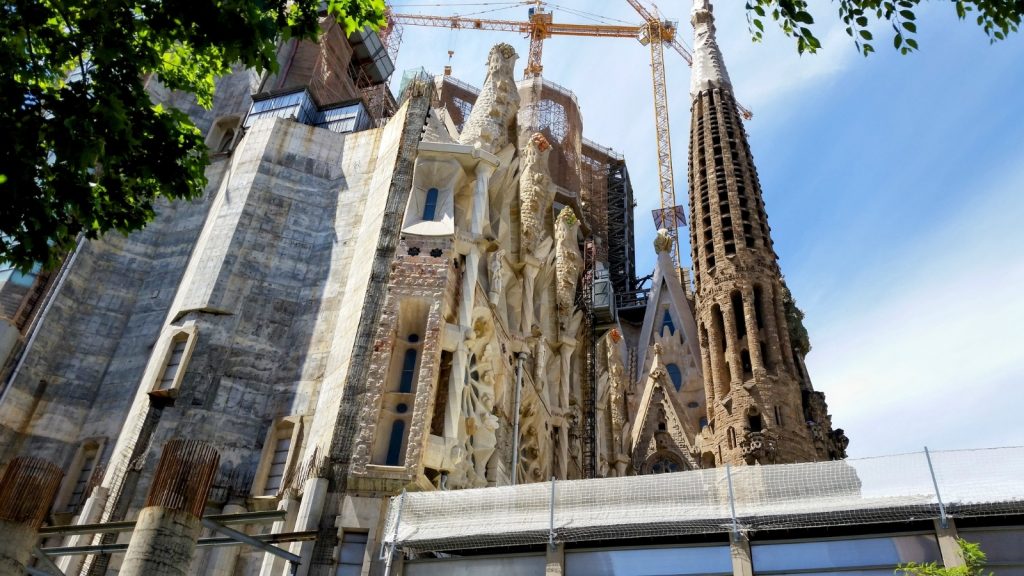
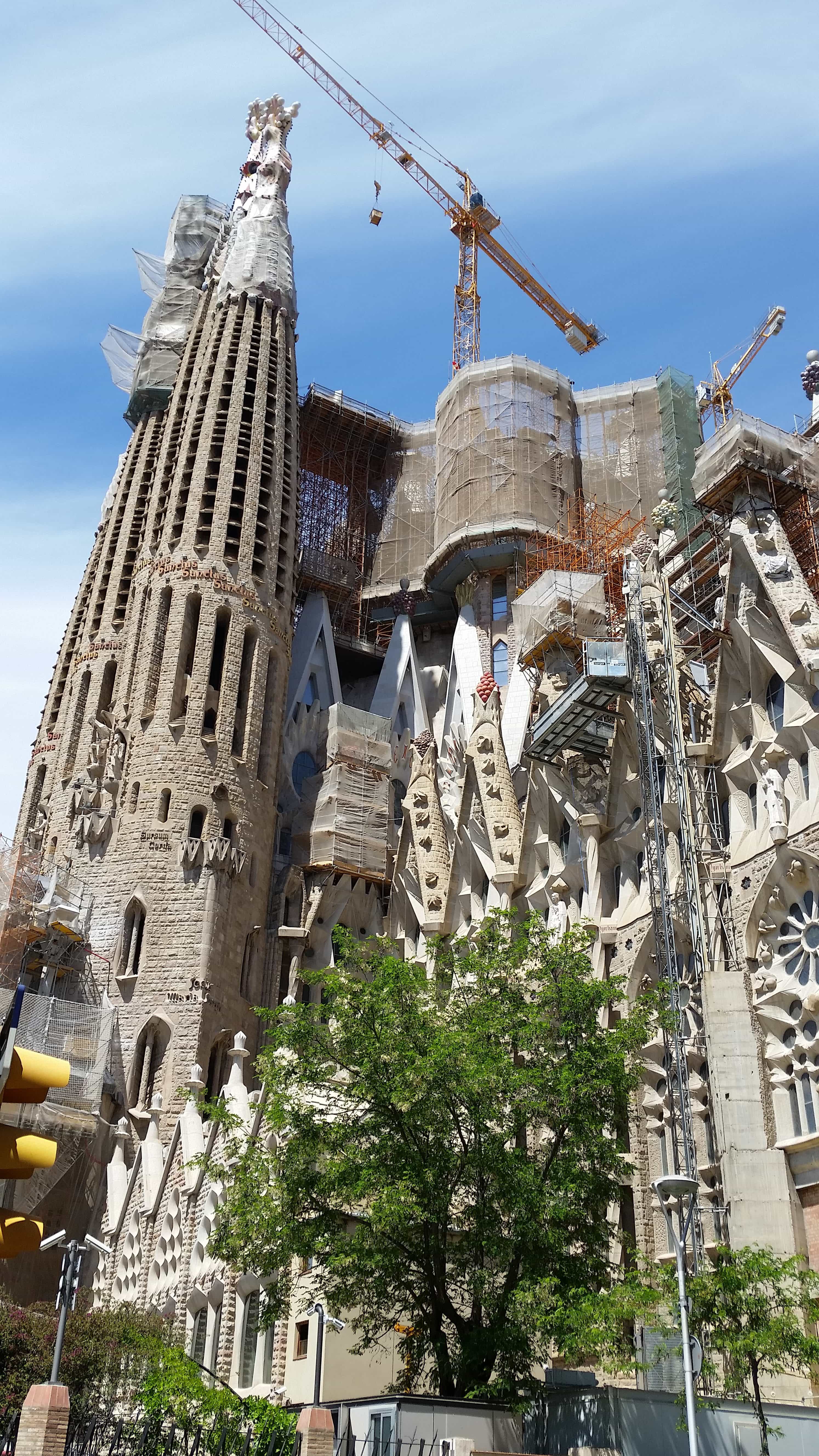
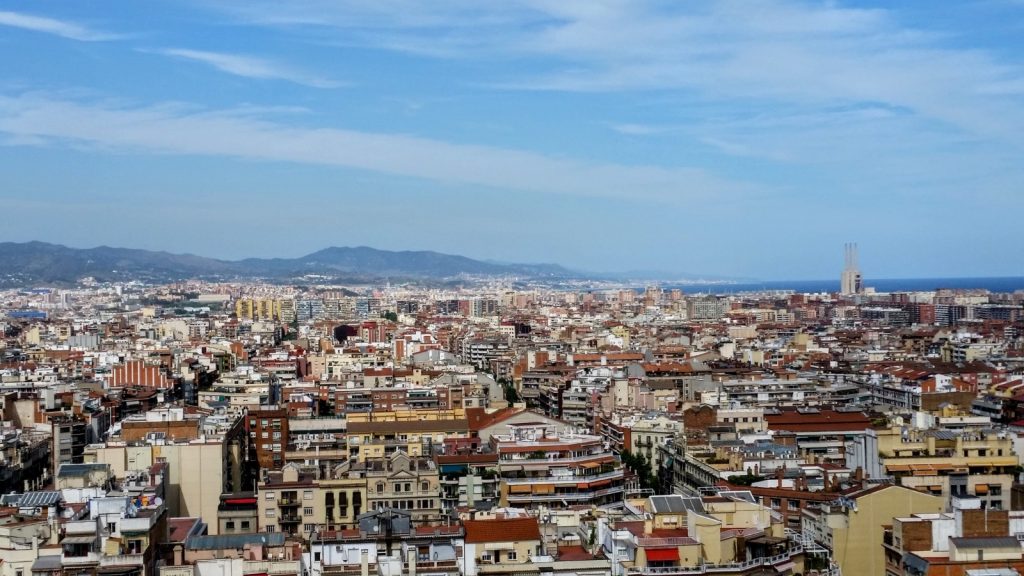
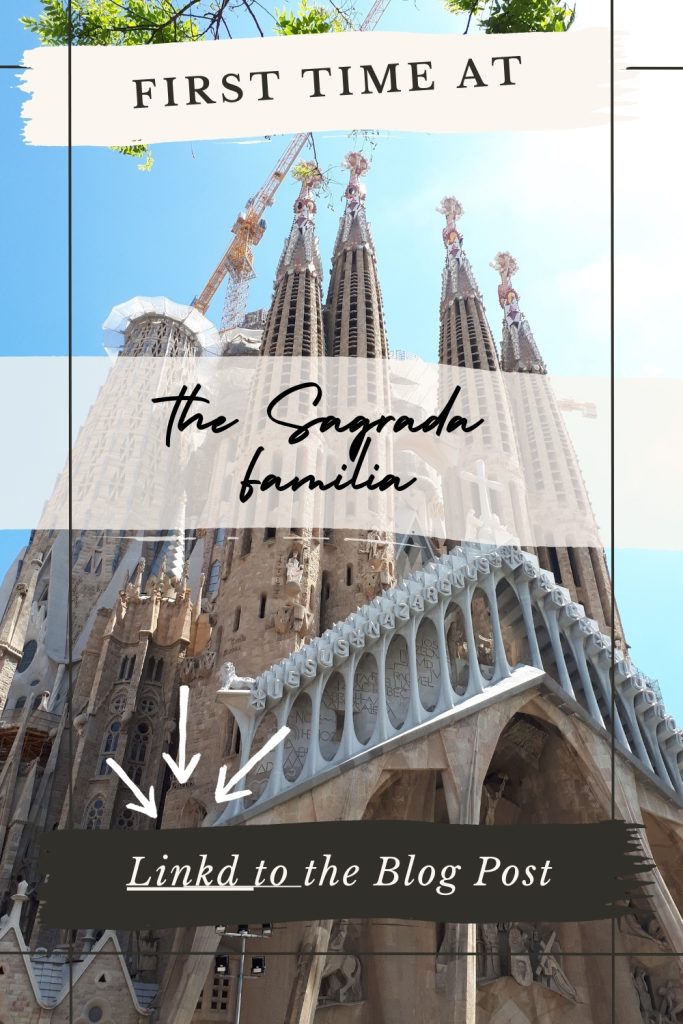
Upon arrival to the Sagrada Familia, you will first notice its sheer size. This is no ordinary cathedral! With eight enormous spires (and ten more in the works) reaching 170 m, the cathedral towers over its surroundings and is surely visible from anywhere within a 15 km radius. With its size, it’s difficult to get a full picture without an aerial view.
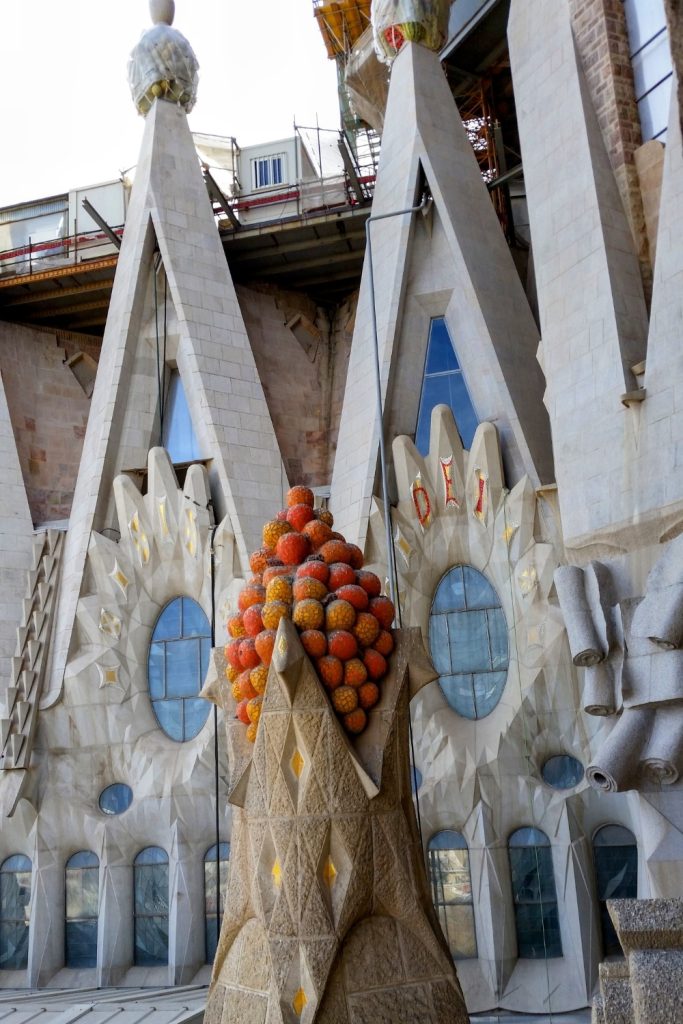
Next, you start to notice the strange, almost alien-like shapes that make up the building. This is Gaudí’s unique style, with his preference for organic, flowing, and soft shapes over sharp, concrete lines that are commonly associated with structures of this size. The Sagrada Familia looks as if it was carved out of an enormous tree in the middle of the city. This gives it an almost whimsical feel, similar to many others of Gaudí’s works.
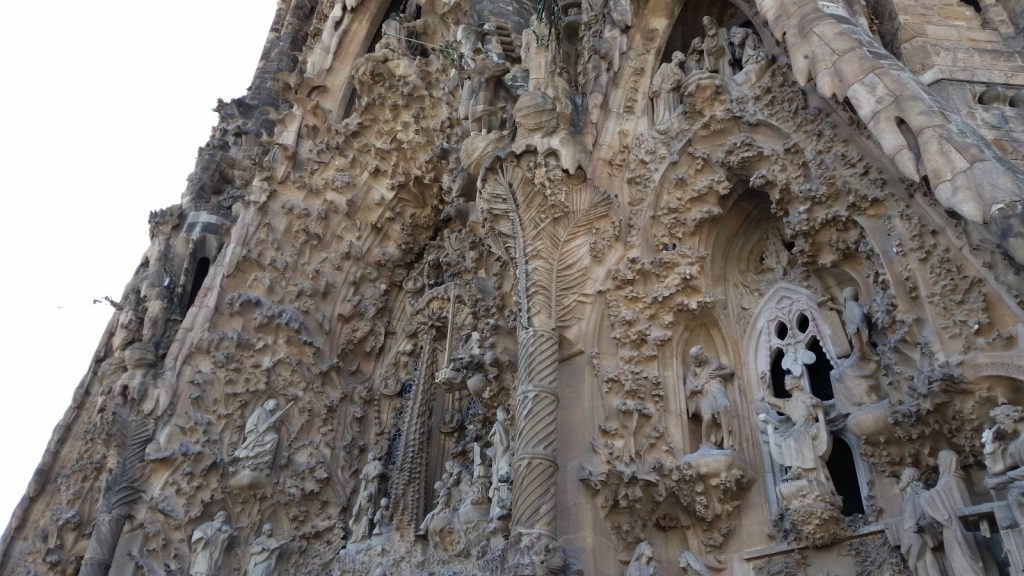
As you walk around the cathedral, you will find that the exterior of the church is not what you would normally expect. Three large facades frame the cathedral, each with its own theme as chosen by Gaudí. There is a very detailed Nativity Facade that is dedicated to the birth of Jesus and is decorated with elements of life (a fitting way to welcome visitors). There are animals, plants, and the Tree of Life that rises above the door, once again illustrating Gaudí’s obsession with nature.
The Passion Facade, in contrast, is plain and simple with clearly defined lines and columns that resemble bones. It is dedicated to the Passion of Christ, the crucifixion of Jesus, and is intended to portray the sins of man.
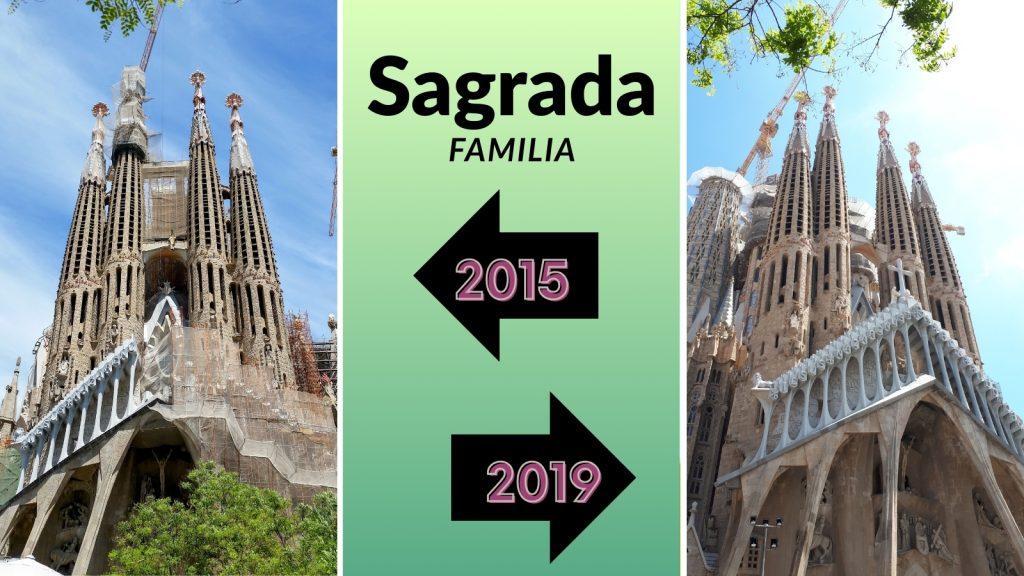
The last facade is the Glory Facade, which is the largest of the three and is dedicated to the Celestial Glory of Jesus and represents the road to God. Unfortunately, this facade is still under construction but is said to be decorated with demons, idols, and false gods representing the Seven Deadly Sins at the bottom, while the top will be representative of the Seven Heavenly Virtues.
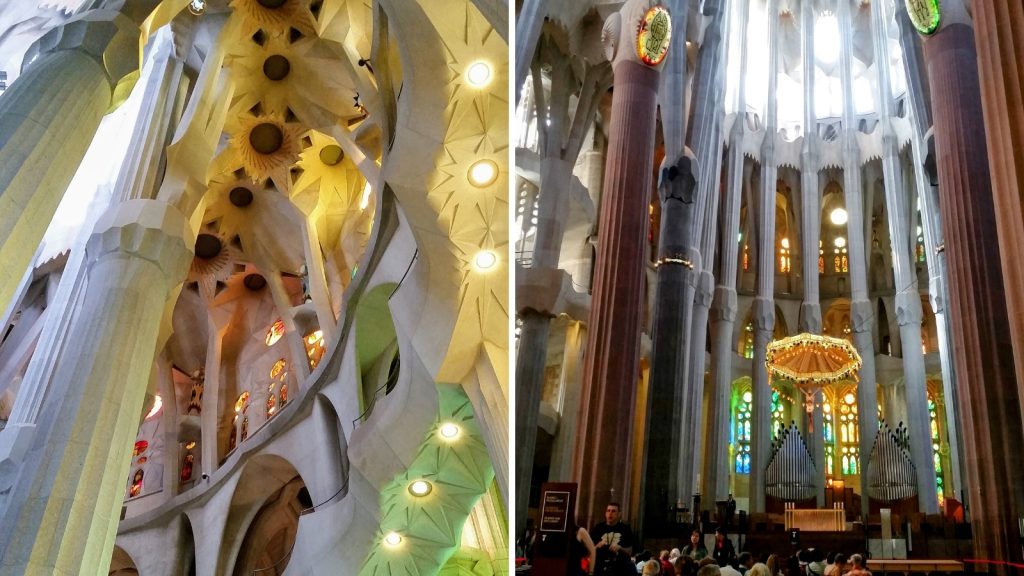
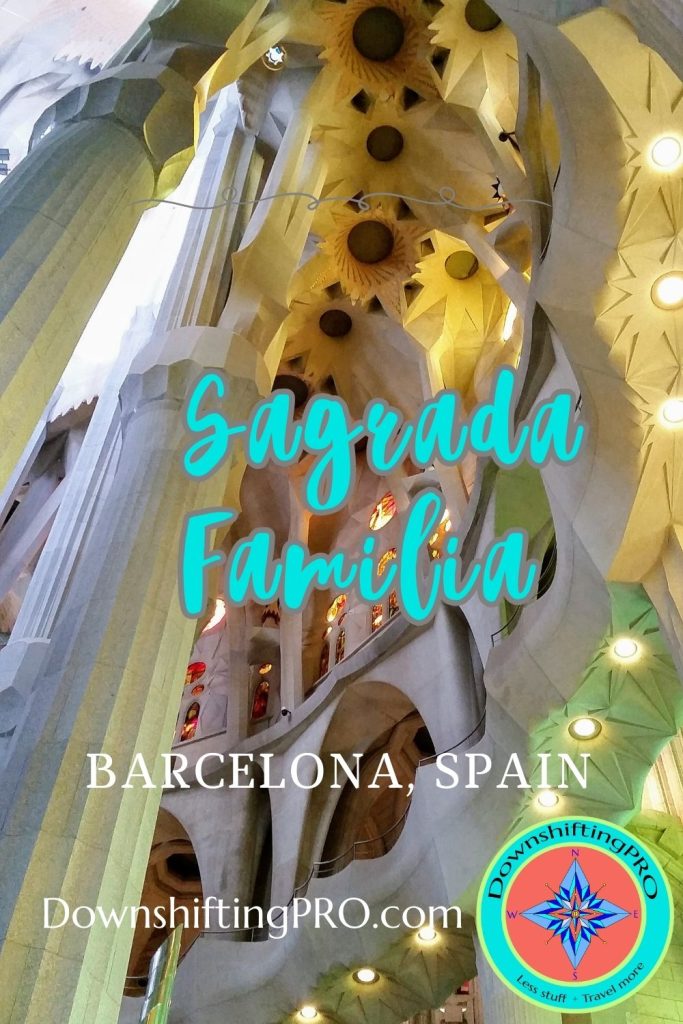
The theme continues as you enter the building; rows of tree trunk-like columns fill the space and draw your eye to the ceiling, which is unlike any other cathedral you have or will ever see. It feels like walking under a tall canopy of trees with summer sunshine filtering through branches and leaves. There are essentially no flat surfaces within the cathedral, just as if in a forest.
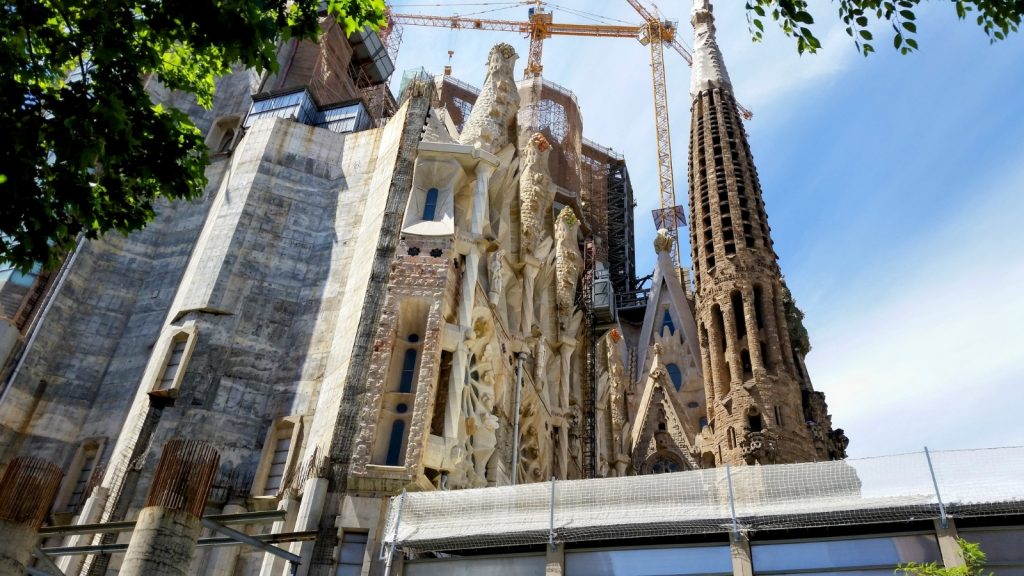
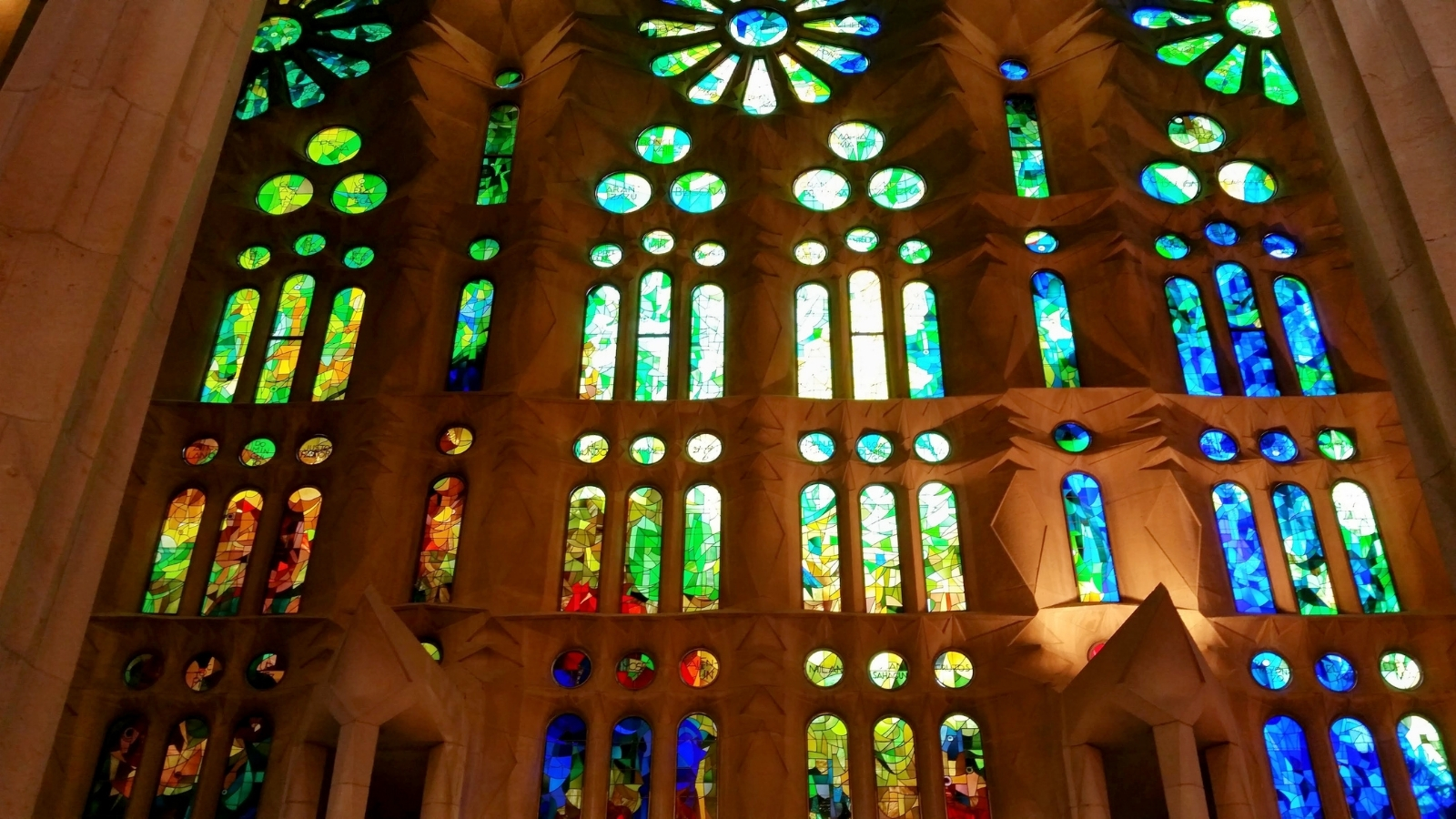
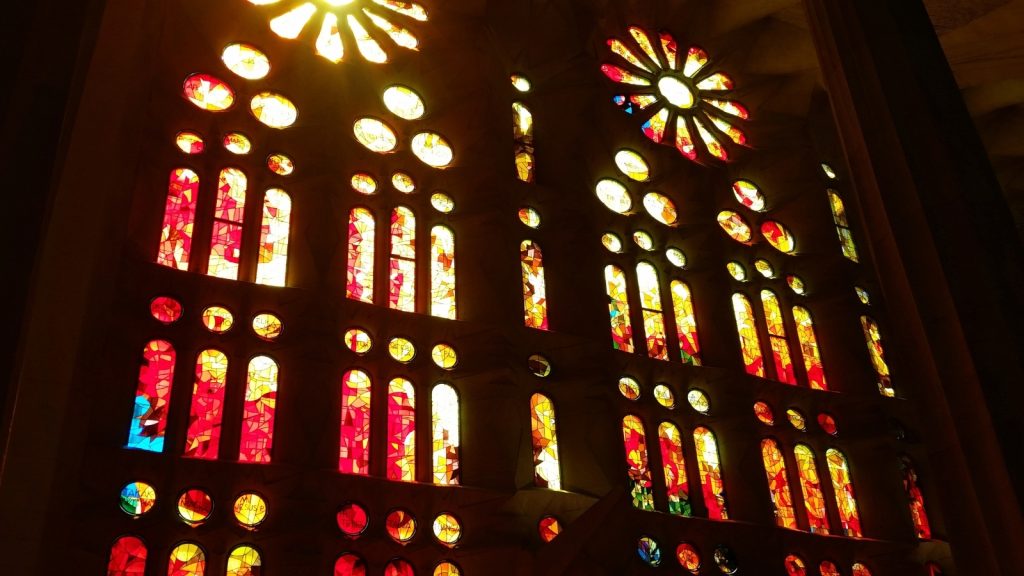
Unlike many cathedrals of the era, there are no paintings to bring colour to the space. Everything is just one shade of off-white, with the only colours coming from the stunning stained glass windows that frame the entire building. One side of the cathedral has warm hues of orange and red, while the other has cooler shades of blue and green. As you look around at the windows, it feels almost as if you’re looking through a kaleidoscope!
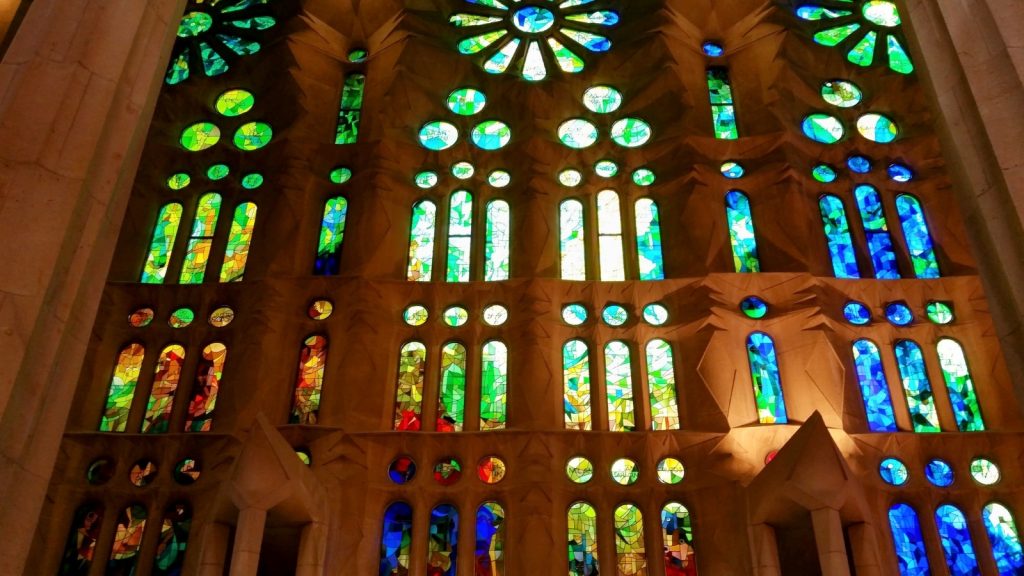
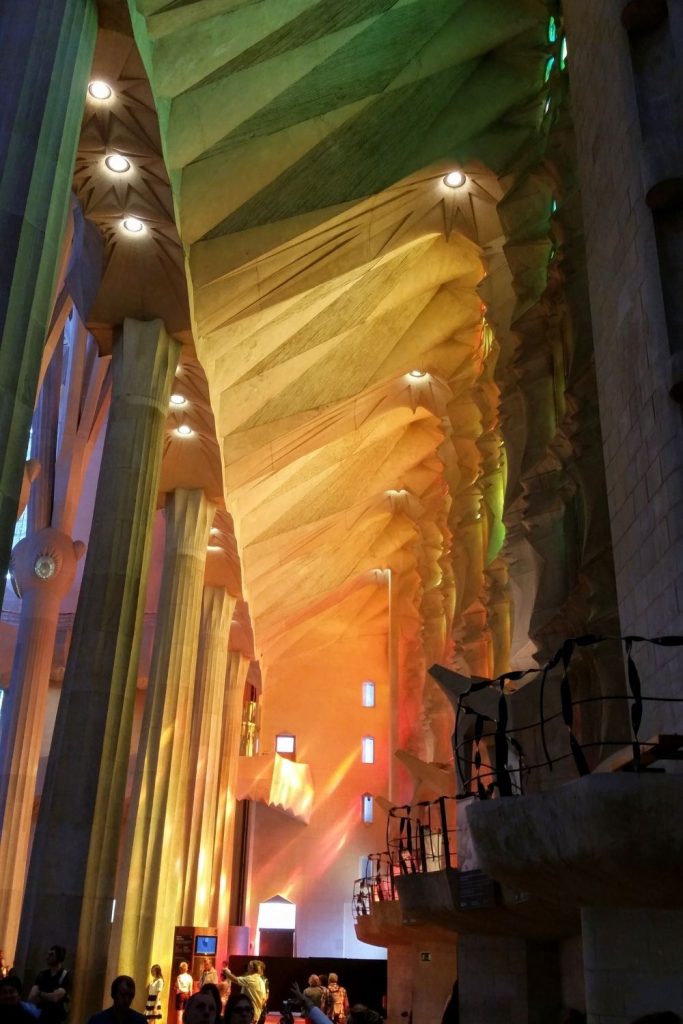
I have to admit when the sun shines through those stained glass windows, you are in the presence of God. It is a testament to the people of Spain that they have continued to devote their life’s work to the completion of this sacred space.

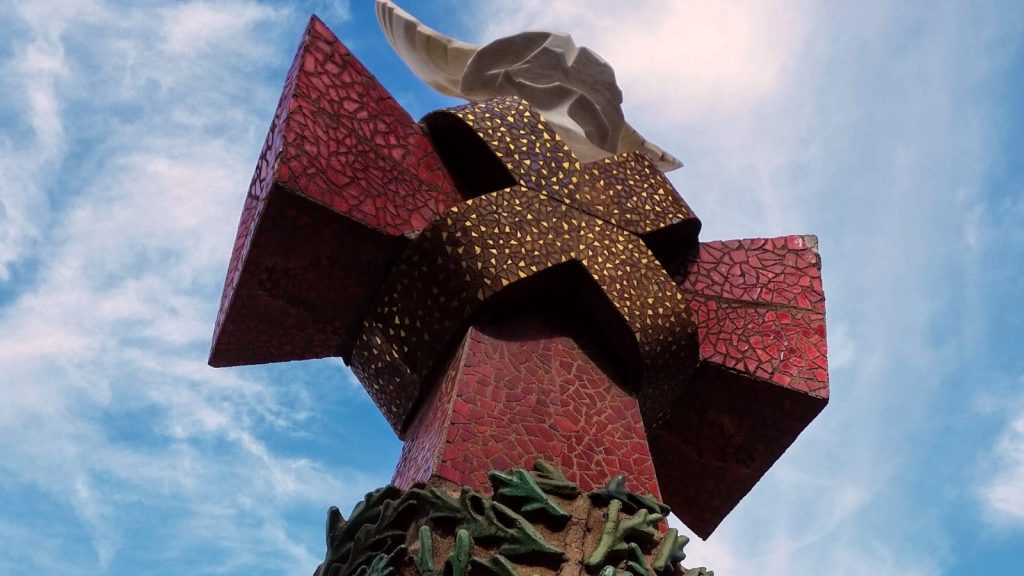
If you get the opportunity to ascend to one of the spires, you will see a beautiful view of the surrounding area as well as a closer look at the details of the more inaccessible parts of the cathedral. For example, you may notice that some of the smaller spires are topped with grapes and wheat!
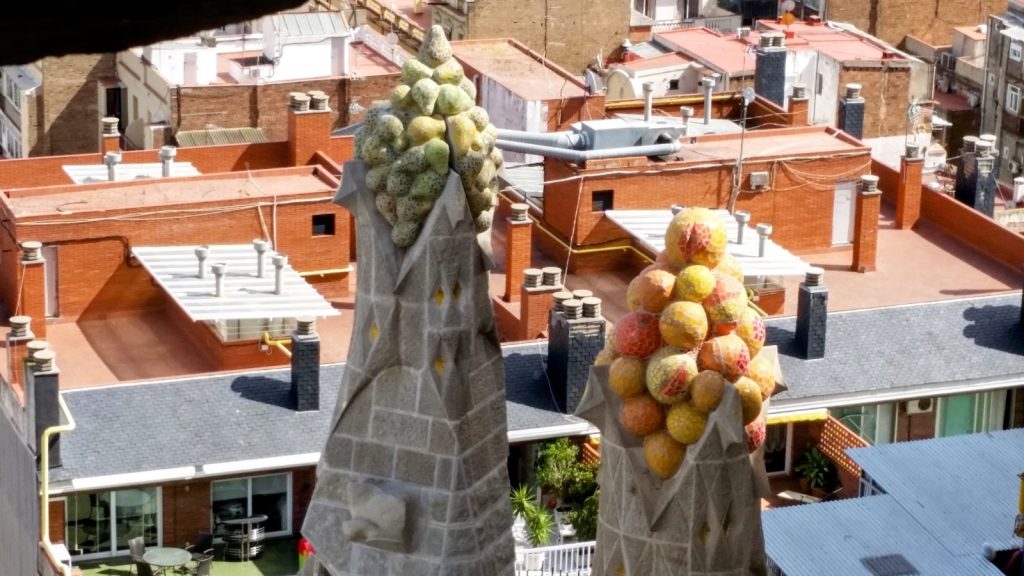
Even over a year after this trip, that’s something that always makes me smile: the fact that Gaudí somehow convinced someone to put giant grapes on top of this monumental display of glory to God.
Even explaining all of this to you now, I feel like I do little justice to the cathedral itself. I didn’t mention the altar or the organ or the burial site of Antoni Gaudí himself.
Even though it was designed over a century ago, with decades of Spanish history, it feels like a modern piece of art and one that I would not mind going to see again in the future (hopefully when it is 100% complete). My mom and I had a wonderful time exploring the Sagrada Familia and though I don’t remember much from the audio tour that I’m sure we brought around with us, the feelings of beauty and glory inspired by the place of worship still remain with me today.
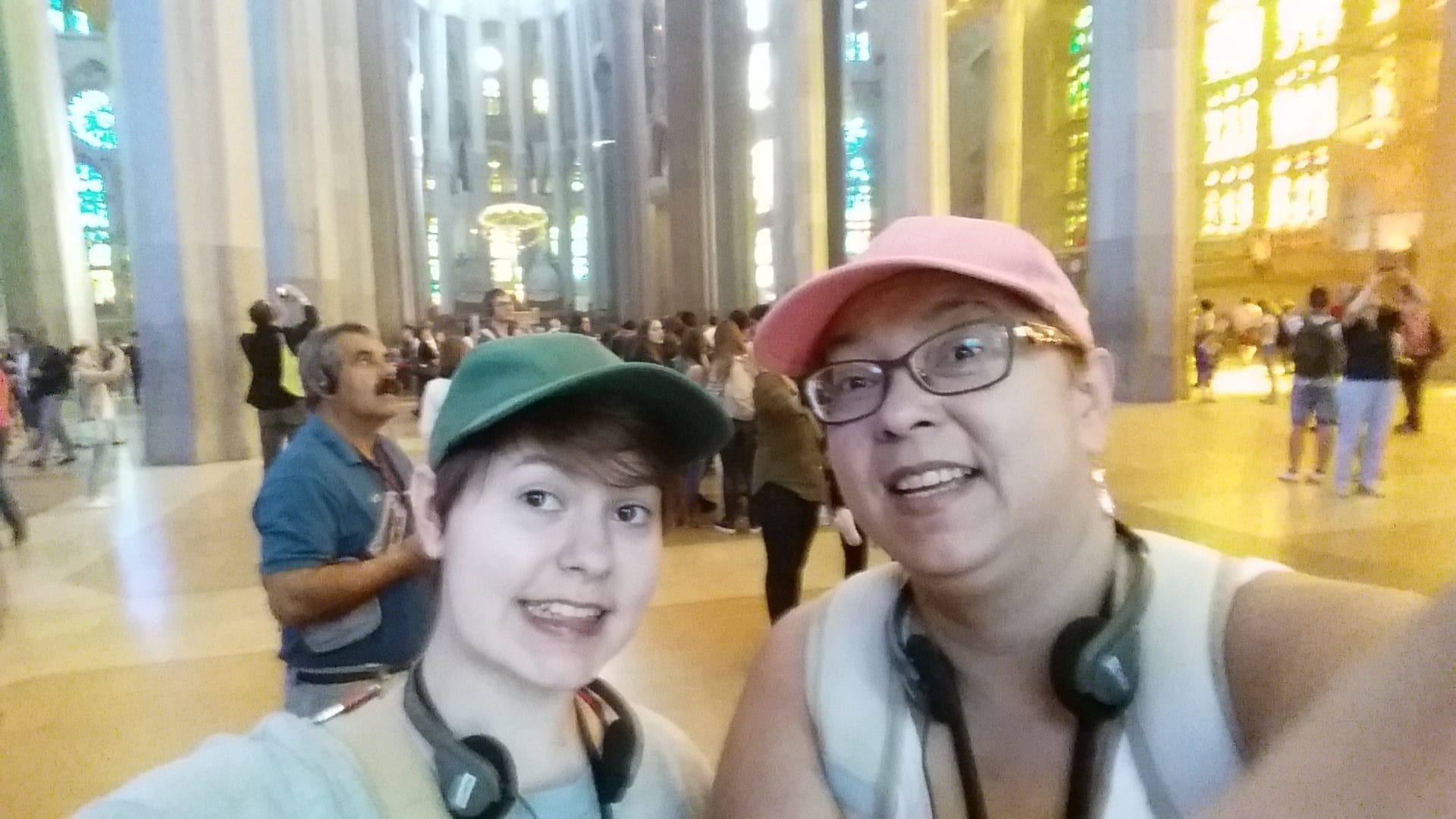
Actually, my mom and I remember the trip so fondly that for this year for Christmas, she gave me a blown-up picture of the Sagrada’s interior to hang on my wall to keep a little Barcelona with me! I’ll be back one day, that’s for sure.

In 2015, Lauren Ibbott was a second year Western University student, and freelance writer. She frequently wrote for DownshiftingPRO. Please follow her on Instagram @Lauren_Patii All opinions are her own. You can read more of her post below:
- Street Art in Barcelona
- Centre George Pompidou in Paris
- The Dali Theatre-Museum In Spain
- University Life
- Korean Cool Book Review
- Mophie Battery Review
🥾 Explore: Tours & Experiences
🏡 Where to Stay: Top Accommodations
🚙 Hit the Road: Car Rental Deals
🛫 Get Away: Find Flight Deals
🎒 Shop: Travel Essentials
This sounds like a really amazing spot to witness the glorious architecture and history of Spain. That shot of the stained glass and the light creeping through is remarkable. Truly looks like a kaleidoscope. I’m glad you were able to go with your Mom. You will both remember that trip for a lifetime.